Prague at a glance:
- Travel time: 2hrs direct flight from London.
- Vibe: Fairytale, atmospheric, romantic.
- Top must-see: Prague Castle and the views over the city.
- Best for: City breakers, architecture lovers, beer connoisseurs (the Czech Republic has the highest beer consumption per capita in the world).
The great thing about Prague is that all the main highlights are within walking distance of each other. Charles Bridge, Prague Castle, and the Astronomical Clock are just a few of the examples of what to see in Prague in 3 days.
Exploring Prague is so fun for a short trip away because there’s so much beauty to see (I was blown away by how stunning every building is!) yet you can also do it at a relaxed pace with no need to factor in taxis or public transport, although this is an option if you prefer.
Each corner of Prague, nicknamed the City of a Hundred Spires, has its unique story and character. Here’s what to see in Prague in 3 days to ensure you see all the key highlights and experience the heart of Czech culture.
Historical landmarks to see in Prague
Prague is filled with historical landmarks that reflect its rich past.

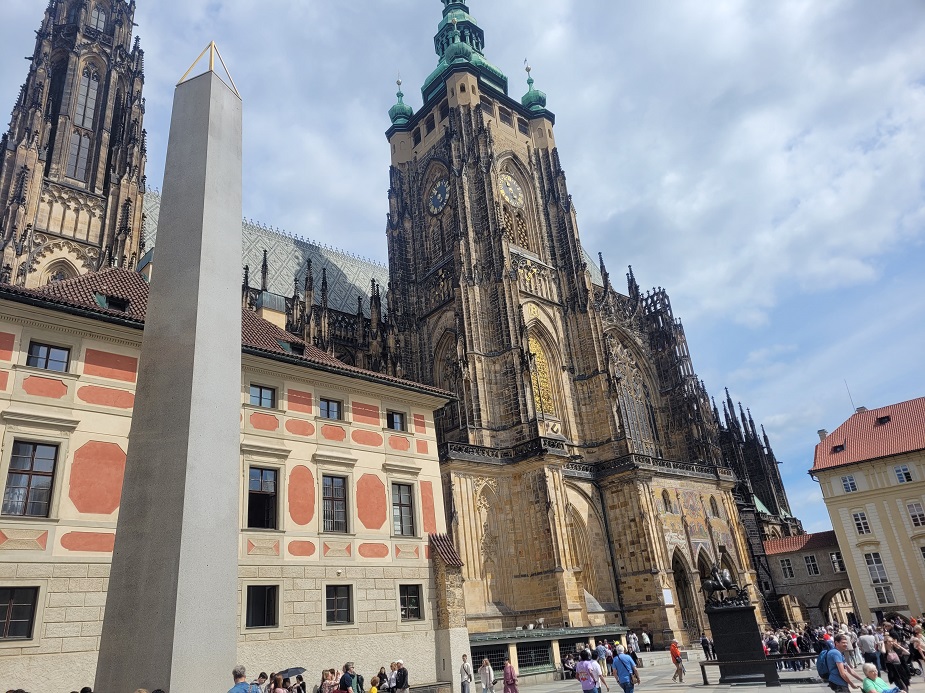
Prague Castle (Pražský hrad)
Prague Castle is one of the most iconic landmarks in the city. Situated on top of a hill, you can see it from many different parts of the city. It offers stunning views and is one of the largest ancient castles in the world. The castle complex includes the Gothic-style St. Vitus Cathedral, the Old Royal Palace, and the picturesque Golden Lane. It’s pretty incredible seeing all the different, yet all extremely beautiful, pieces of architecture that make up the castle.
My personal highlight was walking around the gardens, which had some beautiful flowers, and being able to have a unspoiled panoramic view across Prague. There is a bit of a steep walk up to the castle, but in terms of what to see in Prague, this is a must.
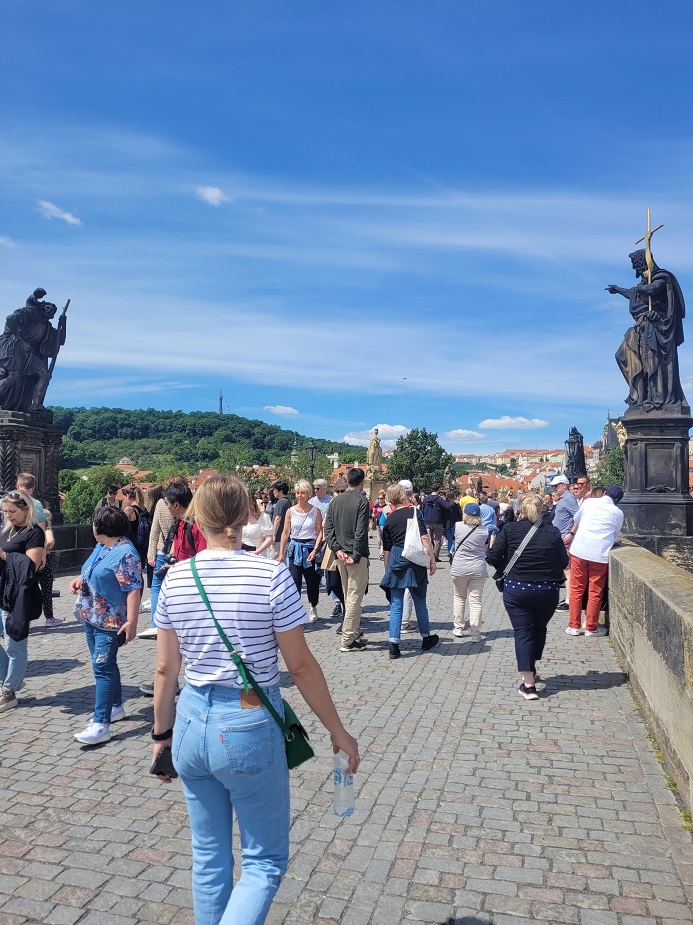
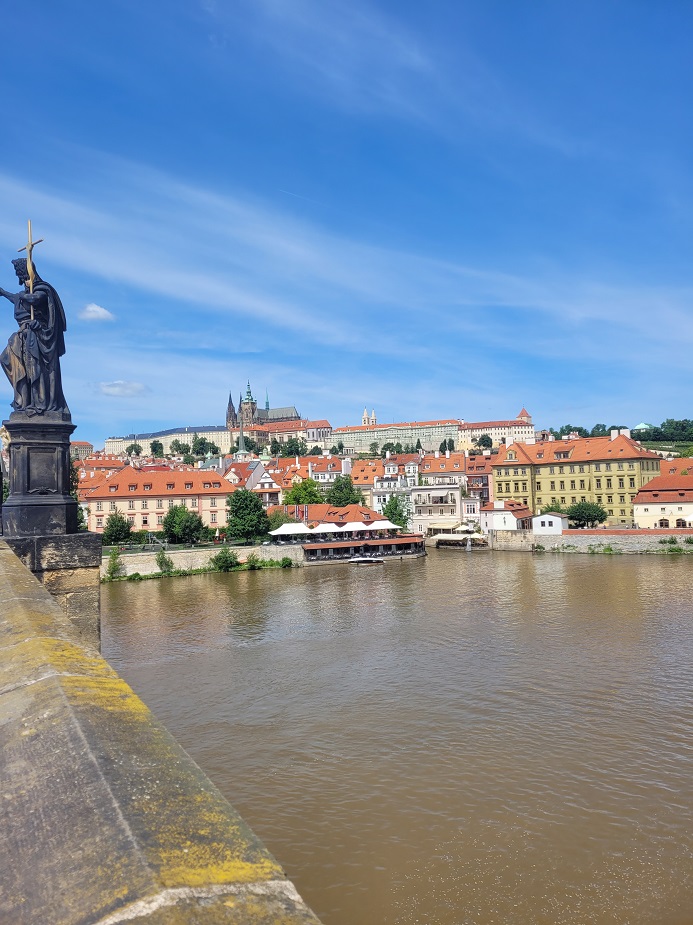
Charles Bridge
Charles Bridge, built in the 14th century, connects the Old Town with the Lesser Town (Malá Strana). As you walk along it’s adorned with 30 baroque statues of saints and historical figures, making it like an open-air gallery.
As you travel across, you’ll find breathtaking views of the Vltava River and the city skyline. The bridge is very popular with tourists, as well as street musicians and local artists hoping to sell their goods to passers-by. I have to say I didn’t time my trip across the bridge particularly well as it was lunchtime and very busy! If you want a better chance to take the sights in, I would suggest visiting early morning or later into the evening so you’re not battling the crowds.

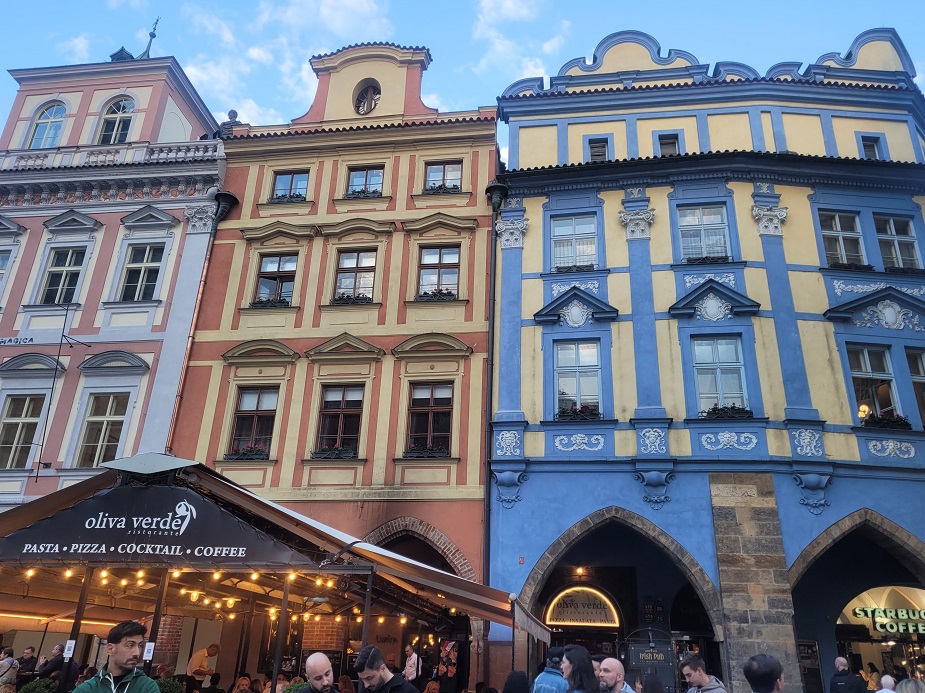
Old Town (Staré Město)
The Old Town is the heart of Prague’s historical centre and is where I first started my exploration of Prague. I stayed just a few minutes walk from the main square, and I would highly advise staying in this area as it’s centrally located and makes it easy to visit everywhere mentioned in this post.
The square is surrounded by stunning buildings such as the Church of Our Lady before Týn and the Old Town Hall. It’s a bustling area filled with cafes, bars, museums and street performers. It’s a joy exploring the narrow cobblestone streets that wind through the Old Town and seeing the different shops and discovering what items Prague best known for. Be warned though that the cafes in the middle of the square do overcharge tourists – we definitely got caught out with our first lunch bill!
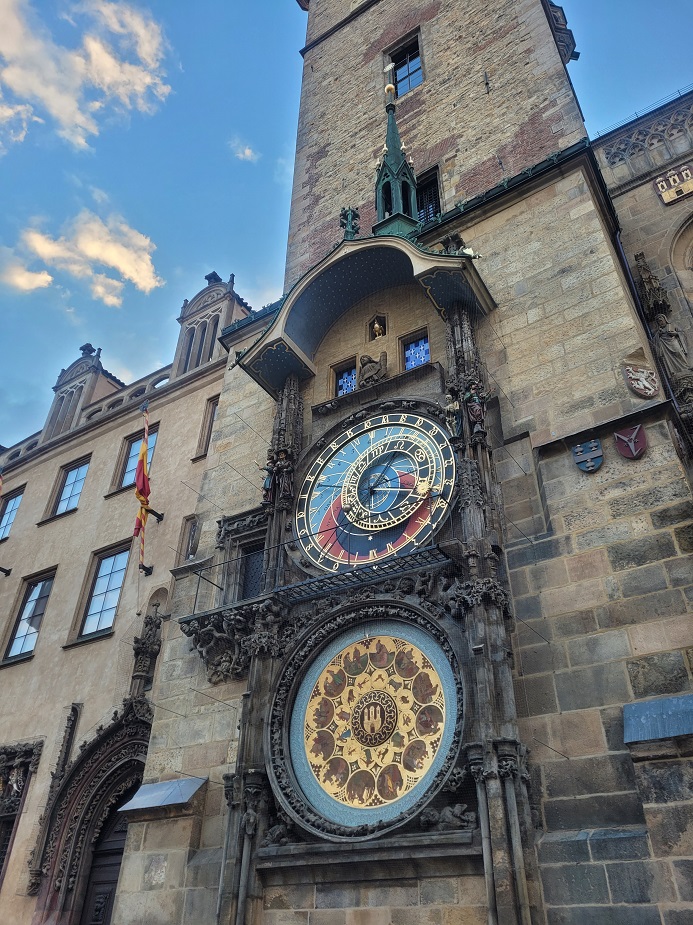
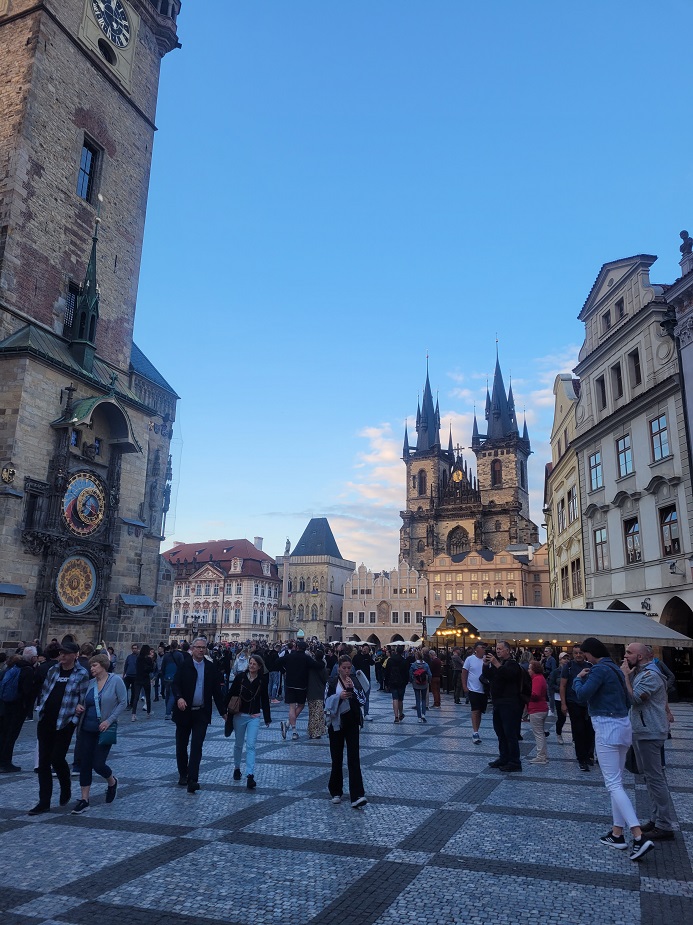
Astronomical Clock
The famous Astronomical Clock, which dates back to the 15th century, can be found in the Old Town Square. On the hour every hour, tourists flock around to watch the clock’s figures, including the Twelve Apostles, perform a unique show. For me personally the “show” is very underwhelming! But seeing the clock itself is a definite must.
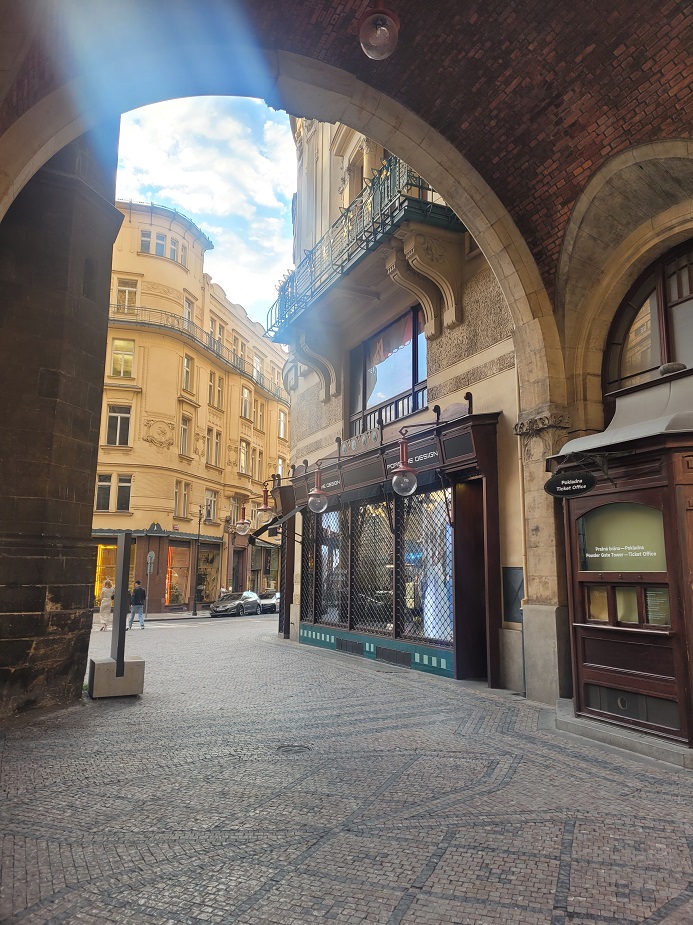

Powder Tower (Prašná brána)
The Powder Tower is an iconic Gothic structure that stands as one of the original city gates dating back to the 15th century. Originally known as the New Tower, it was later renamed when it began storing gunpowder in the 17th century. Adorned with intricate sculptures and a distinctive dark stone facade, it’s a striking reminder of Prague’s medieval past, and separates the Old Town from the new.
Cultural experiences in Prague
Prague offers a wealth of experiences that provide insight into its rich history and vibrant culture.
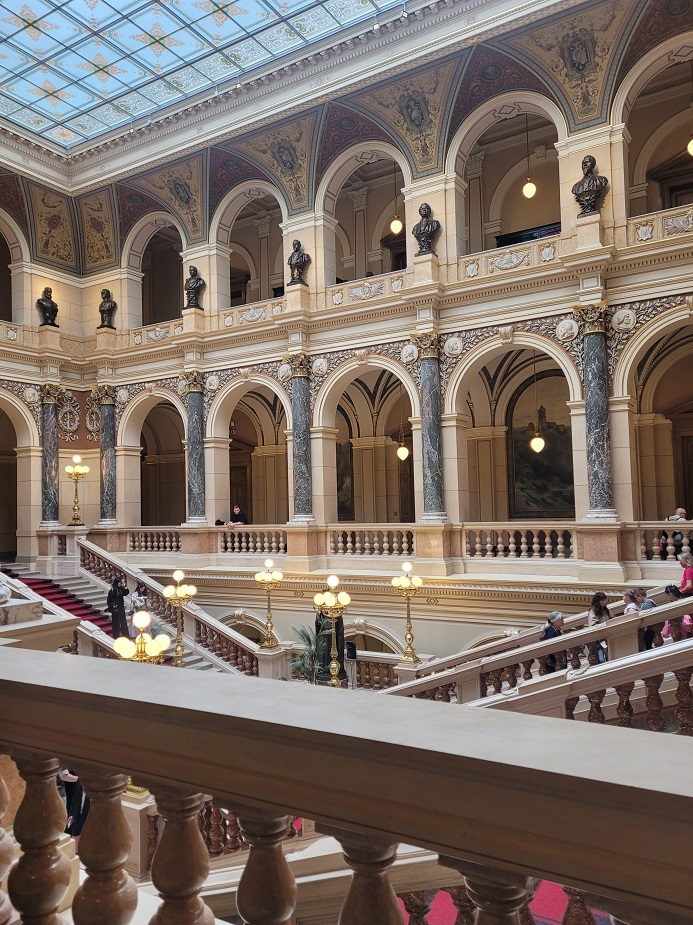
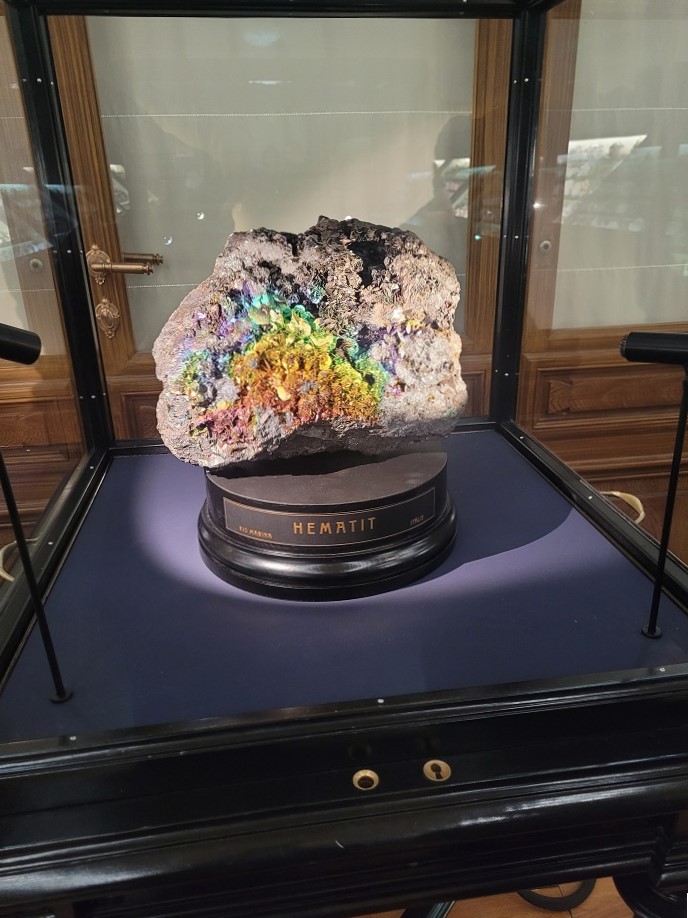
National Museum (Národní Muzeum)
Established in 1818, the National Museum is situated at the top of Wenceslas Square in a stunning neo-Renaissance building. The interiors of the museum are worth the entrance fee alone in my opinion, without all of the brilliant exhibitions too. My favourite exhibition is the Halls of Minerals, I’ve never seen so many incredible minerals and crystals in one place! For those debating what to see in Prague in 3 days I would add this high up on the list. The other two exhibitions that I think are must-sees are Windows into Prehistory which represents world milestones in the history of life on Earth, and The Miracles of Evolution where animals are presented in their natural habitat, including the skeleton of a fin whale.

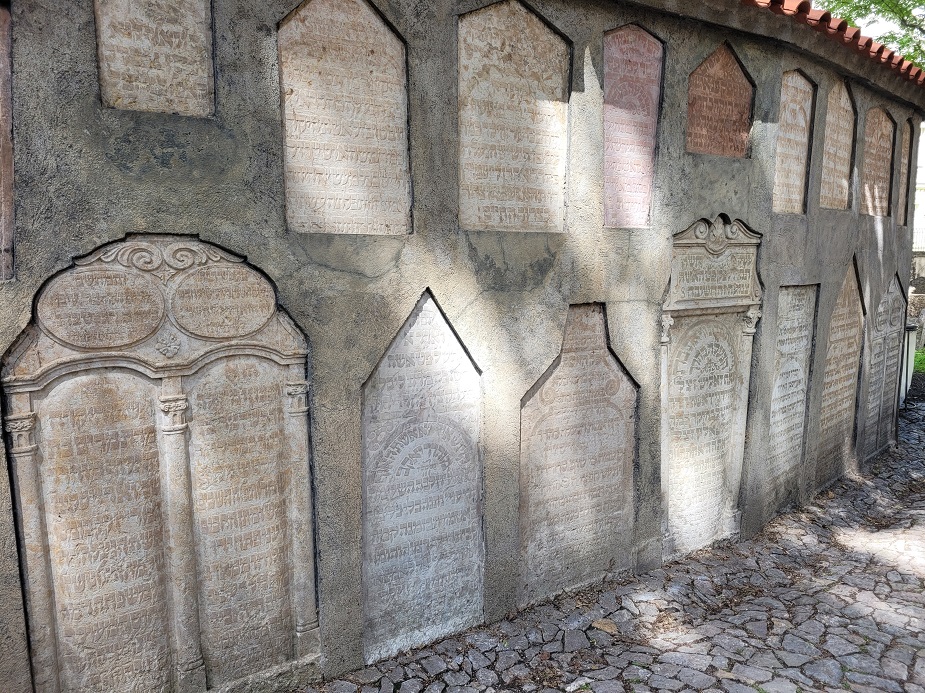
Jewish Quarter (Josefov)
Located between the Old Town Square and the Vltava River, this area is steeped in history dating back to the 10th century. The quarter is home to several well-preserved synagogues, and the Old Jewish Cemetery which is densely packed with centuries-old tombstones, many ornate, that provide a poignant glimpse into the past. Despite the devastation of World War II, the Jewish Quarter stands as a testament to resilience and attracts visitors from around the world.
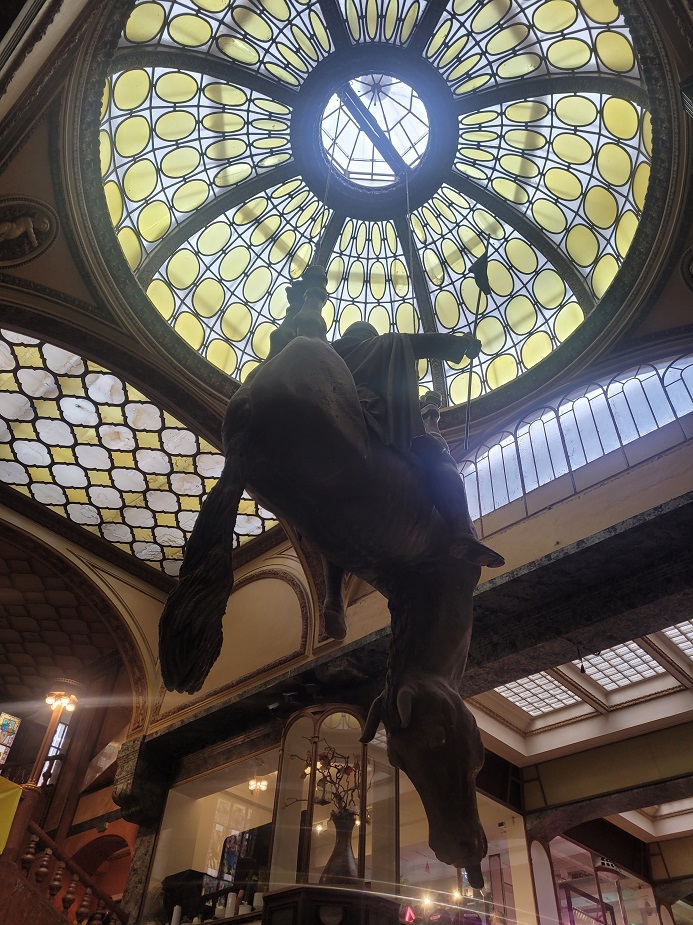
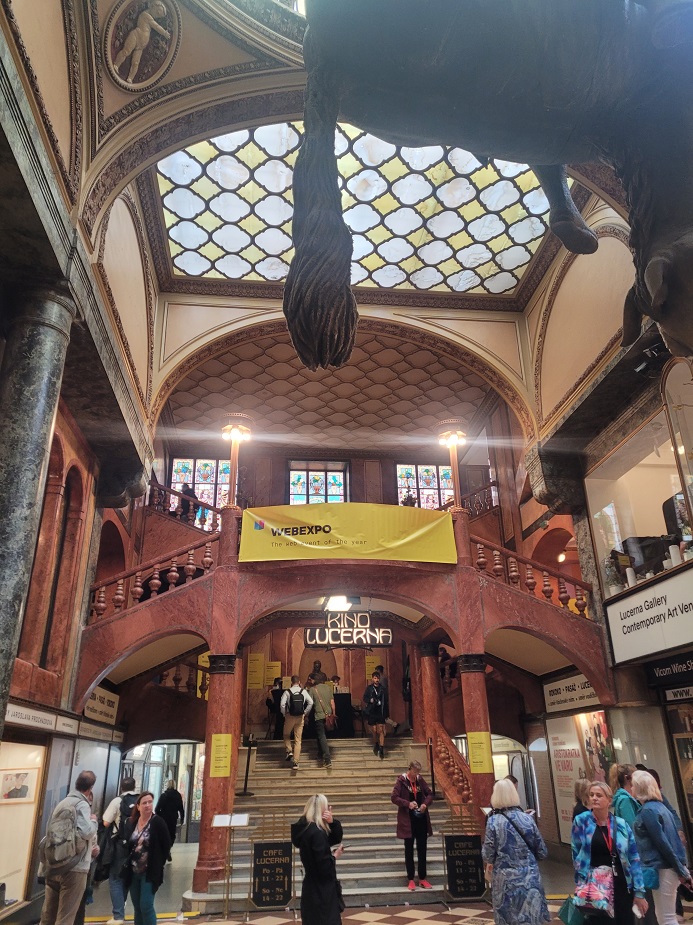
Lucerna Arcade
Opened in 1921, this Art Nouveau arcade is renowned for its stunning architectural features, including an impressive glass dome and intricate marble detailing. It was a big part of social and cultural life in Prague in the past and held many important social events. In 2017, it was named a national cultural monument. One of its most intriguing attractions is the statue of Saint Wenceslas riding an upside-down horse, a whimsical piece by artist David Černý. The arcade houses a music bar and cinema, as well as a large concert hall and a few shops.
Shopping in Prague
What is a break away without a bit of retail therapy? There’s plenty of great places to find some gems in Prague.

Na Příkopě
Na Příkopě means “on the moat”. It’s hard to believe that it was a medieval fortification ditch that was later filled in and transformed into a grand shopping boulevard! It’s home to many historic buildings and is considered “The Financial Heart of Prague.” Being a pedestrian-only street it is lined either side with a variety of shops, some well-known brands such as Primark, C&A, Office, and Marks and Spencer, as well as lesser known brands. There’s also little shopping arcades dotted in-between shops, and plenty of places to stop for a bite to eat. (Pictured is actually Na Můstku, which leads into Na Příkopě in the background).
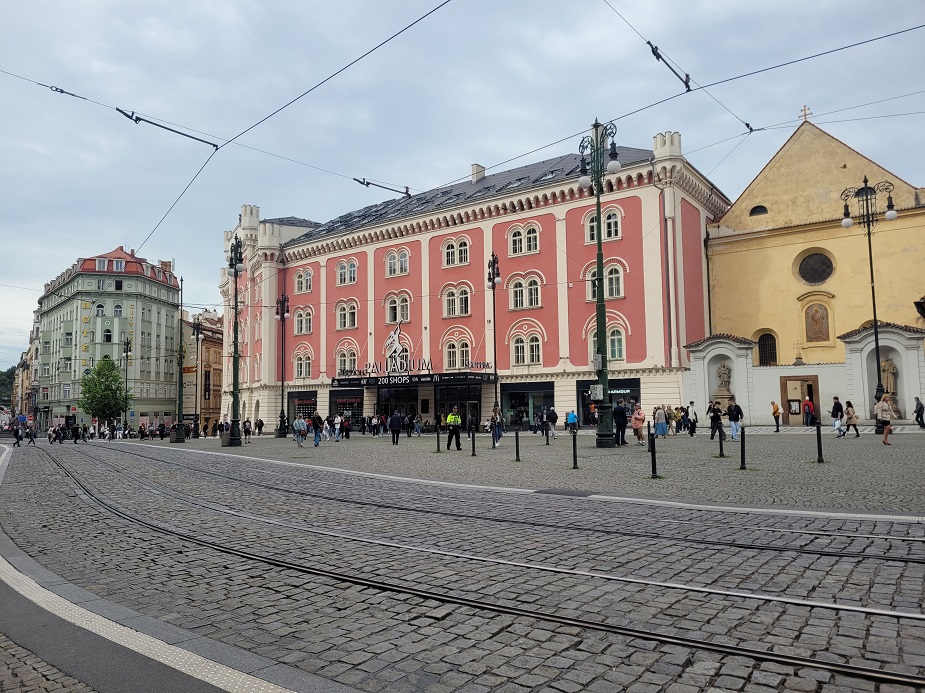
Palladium Shopping Mall
If you love to shop you can’t miss the Palladium Mall. Built on a former army barracks site, it is split across 5 floors and there’s over 160 shops. Surprisingly to me, it also has one of the best food courts I’ve ever come across! I actually ate there several times and highly recommend checking it out. It has all types of cuisines that are cooked fresh and easily rival restaurants in the area but for more affordable prices.

Cobbled Streets
One of the best parts of shopping in Prague is exploring the cobbled streets that lead off of the main roads. One of my favourites to find souvenirs was Melantrichova, particularly the shop called Blue which had some great carved wood items. I also loved the facade of this antique shop on U Obecního domu, and if you like looking at antiques and random bits and bobs, it’s also worth seeking out Bric a Brac on Tynska 7.
Visiting Prague FAQs (2026)
Most of Prague is now cashless. You can use contactless (Apple/Google Pay) for the Metro, cafes, and shops. However, it’s a good idea to keep 500–1000 CZK in cash for small traditional pubs or tipping in “Old Town” establishments.
For speed, use Uber or Bolt (the official airport partners). There is a machine in the airport where you can book a ride and it’s very quick and efficient. A more budget option is to take the 119 bus from the airport to Nádraží Veleslavín and then switch to Metro Line A (Green).
A tip of 10% is standard for good service. In 2026, many card machines will give you a percentage option (0%, 10%, 15%) on the screen.
The historic district is almost entirely cobblestone, which looks beautiful but is very uneven to walk on. If it’s wet it also gets slippery. Avoid heels and stick to comfortable footwear ideally with good support.
It’s worth it if you plan on visiting the Castle and the Jewish Quarter, and using the Petřín Funicular (cable car reopening Summer 2026). It also includes unlimited public transport which is very handy, but you may want to walk most places which is what we did.

Sophie is a freelance writer and editor, and the founder of Britain and Beyond.
