The souks of Marrakech are more than just your standard market. The winding labyrinth of alleyways have been the living pulse of the city for over a thousand years. What’s amazing is that they remain almost the same as they were back then. As you browse you may witness the ancient traditions of Moroccan artisanship first-hand. It’s one of those experiences you must have if you visit Marrakech!
The different souks of Marrakech and what they sell
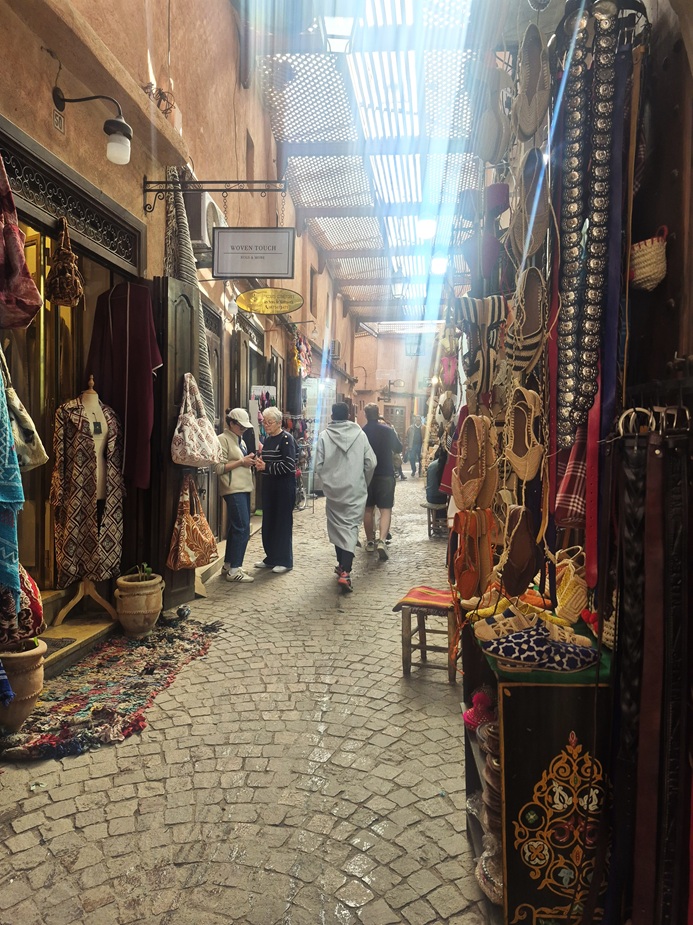
While it may feel like one giant maze (and you absolutely will get lost!), the souks do have a certain structure to them in that they are divided into specialised sections.
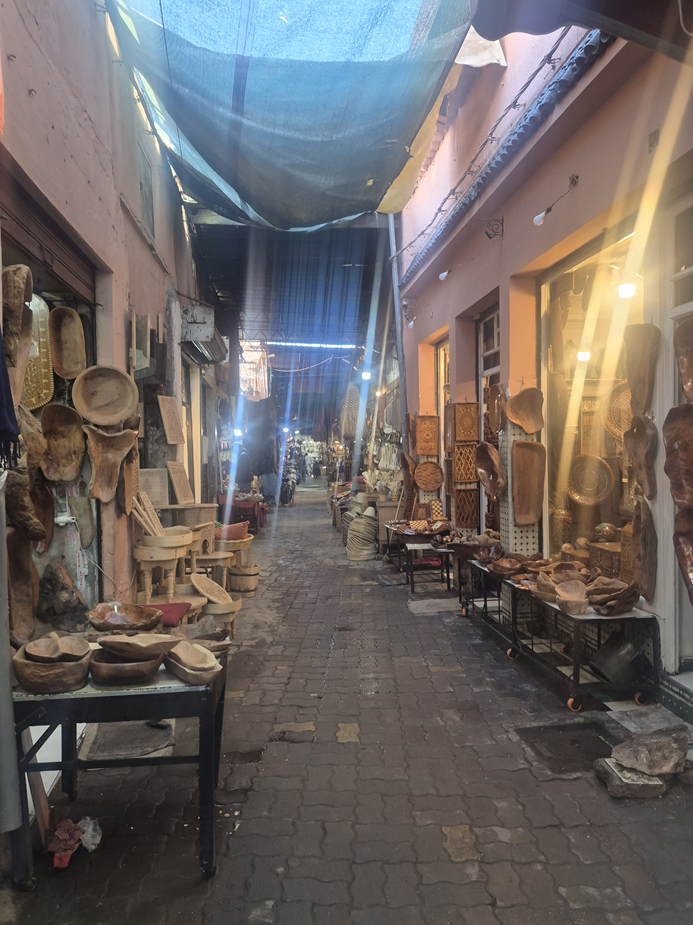
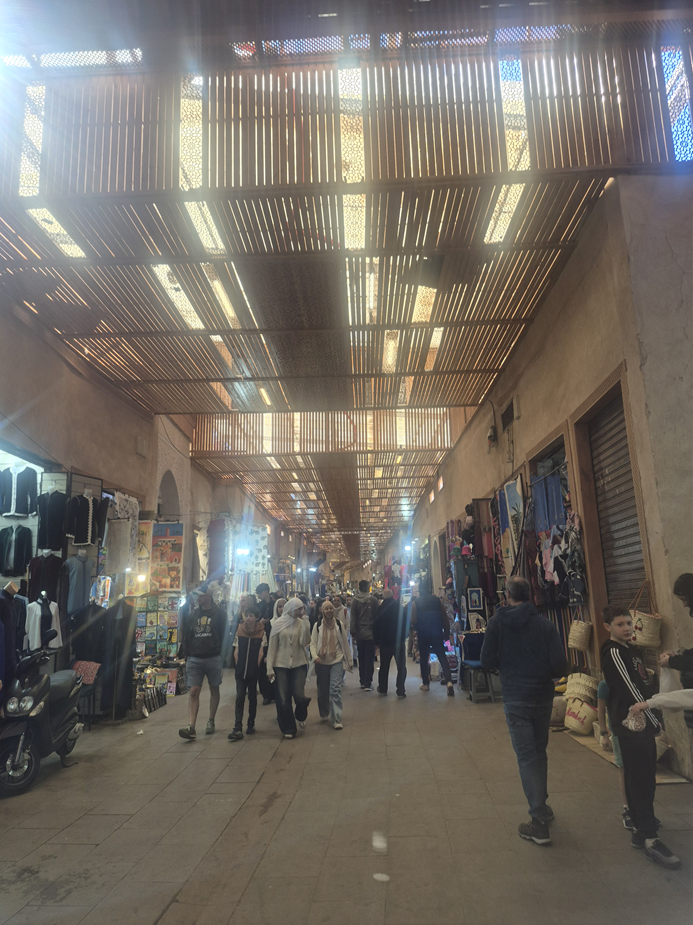
Souk Semmarine
This is the main artery through the souks. This covered street is wider than most of the others and sells a bit of everything from leather, pastries, and high-end carpets.
Souk El Kabir
This souk is known for its fine leatherwork, including bags, belts, and the famous pointed babouche slippers.
Souk Smata
The babouche slippers also have their own “slipper souk” with vibrant colourful rows of them.
Souk Ableuh
Located right near the entrance to Jemaa el-Fnaa, this is the place for olives, pickles, and preserved lemons.
Souk Zrabi
This is the main carpet area. There are some incredible rugs here. To check if a rug in Marrakech is truly hand-knotted:
- The pattern should be as visible on the back as it is on the front
- If the fringe is sewn on or glued, it’s machine-made.
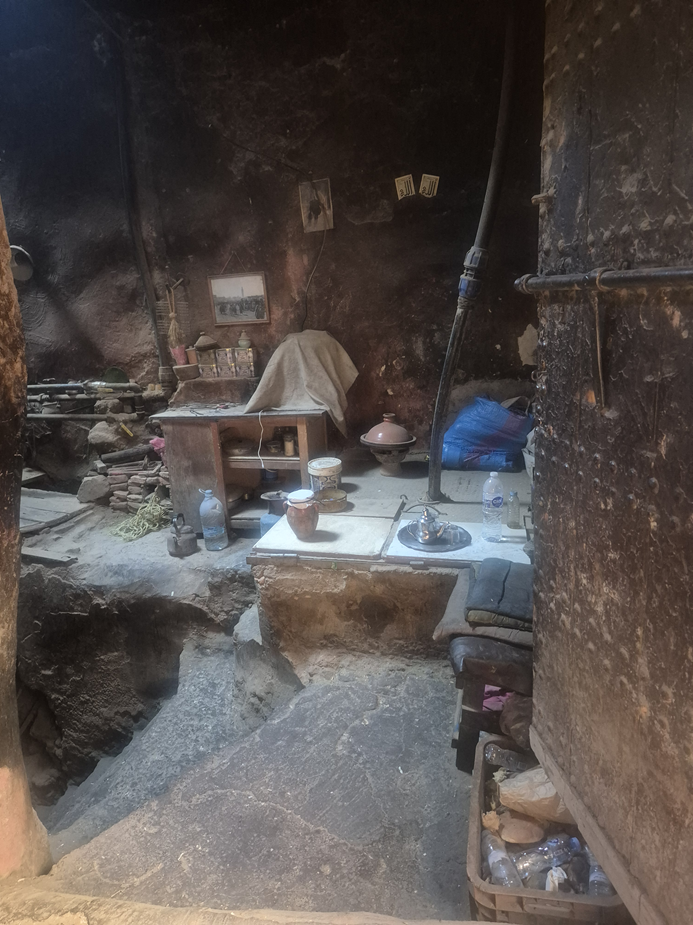
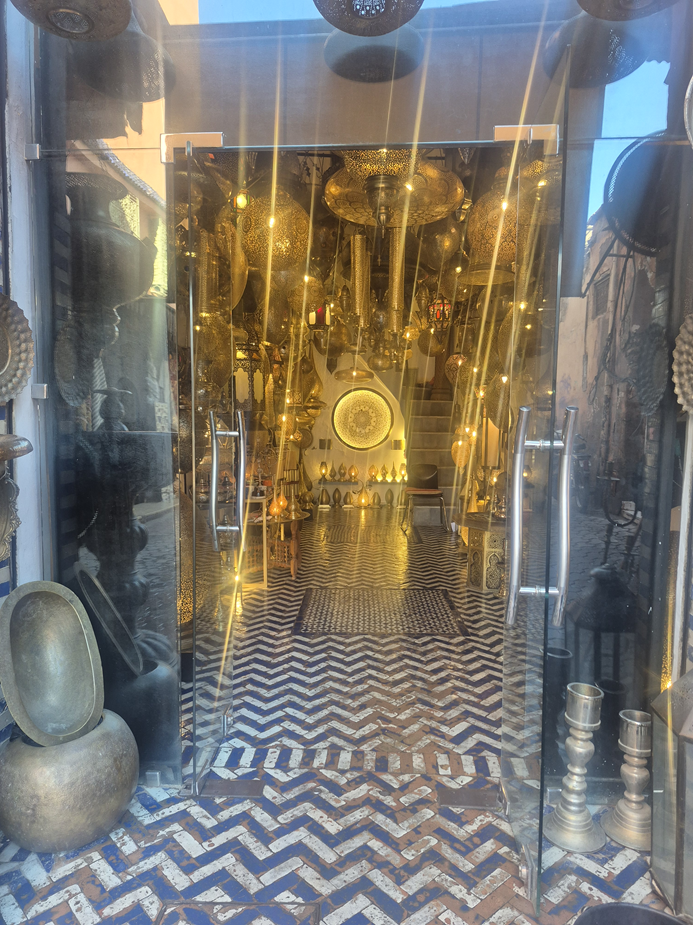
Souk Haddadine
This is the blacksmiths quarter. You may hear the clanging of hammers shaping iron lanterns and other metalwork.
Souk des Teinturiers
This is the dyers souk, where you’ll see wool and silk in vibrant colours hung up to dry in the sun.
Souk des Bijoutiers
The premier spot for gold and silver jewellery.
Souk Cherratine
This is the go-to for handmade leather bags and belts.
Souk Chouari
Here you’ll find woodworkers hand-carving furniture, wooden lanterns, and bowls.
Souk el Attarine
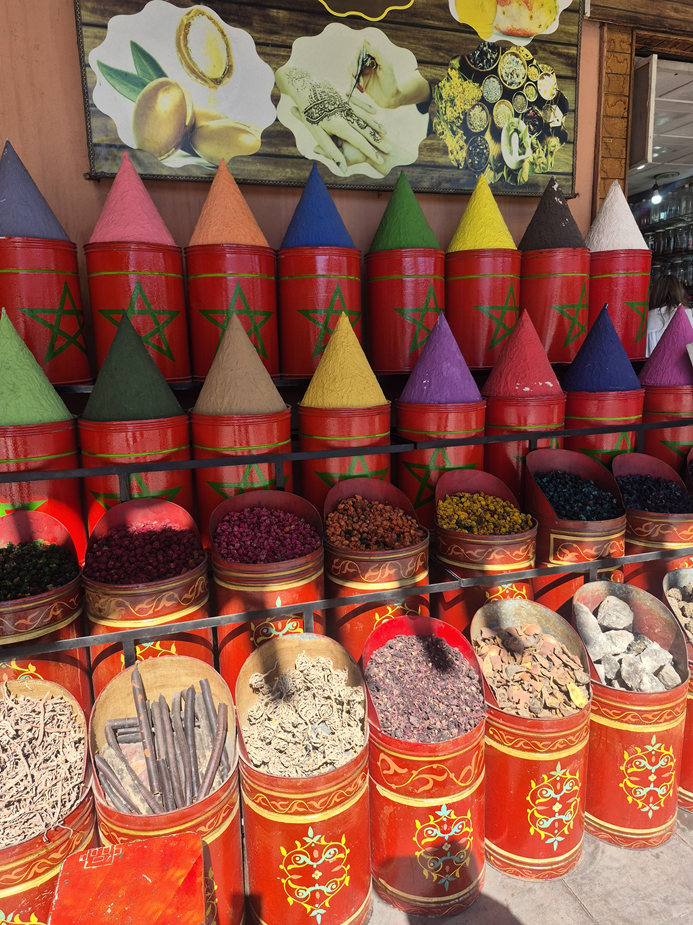
Historically for spices and perfumes, this souk is now also home to copper and brass goods.
Souk Kchacha
The best place for dried fruits, figs, and nuts.
Navigating the souks of Marrakech
The souks are designed like a funnel that feed directly into the open market square of Jemaa el-Fnaa. As you walk south through the main thoroughfares, the narrow alleys eventually give way to the bright light of the square.
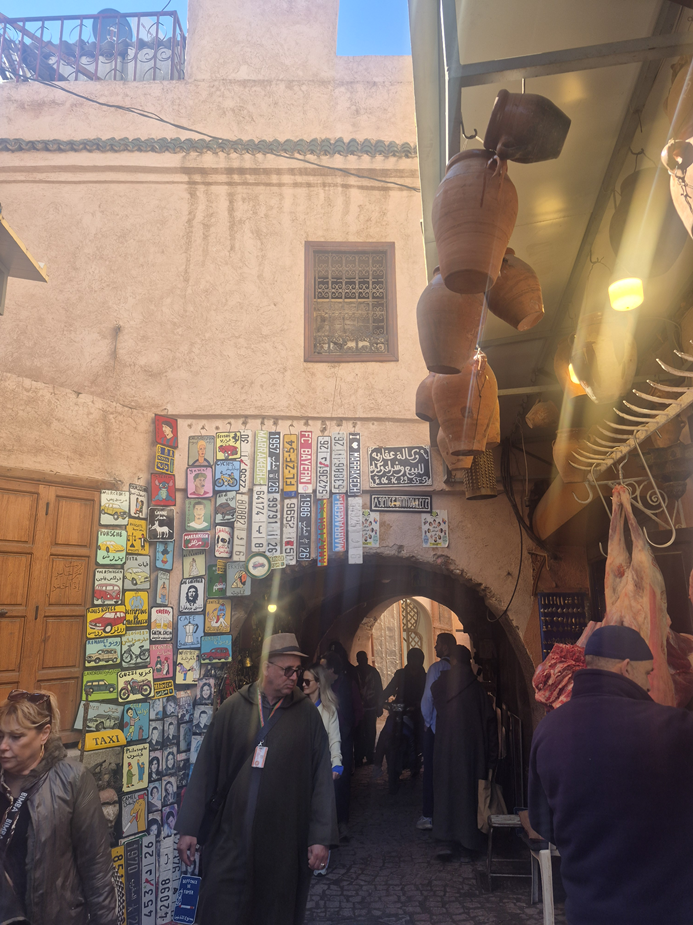
Jemaa el-Fnaa serves as the ultimate landmark, so if you find yourself lost in the souks, simply ask for “La Place.” You can also look on the walls for directional signs, although these tend to be high up and can be quite inconspicuous. Google Maps and similar GPS apps don’t work well in the souks as the signal tends to get blocked.
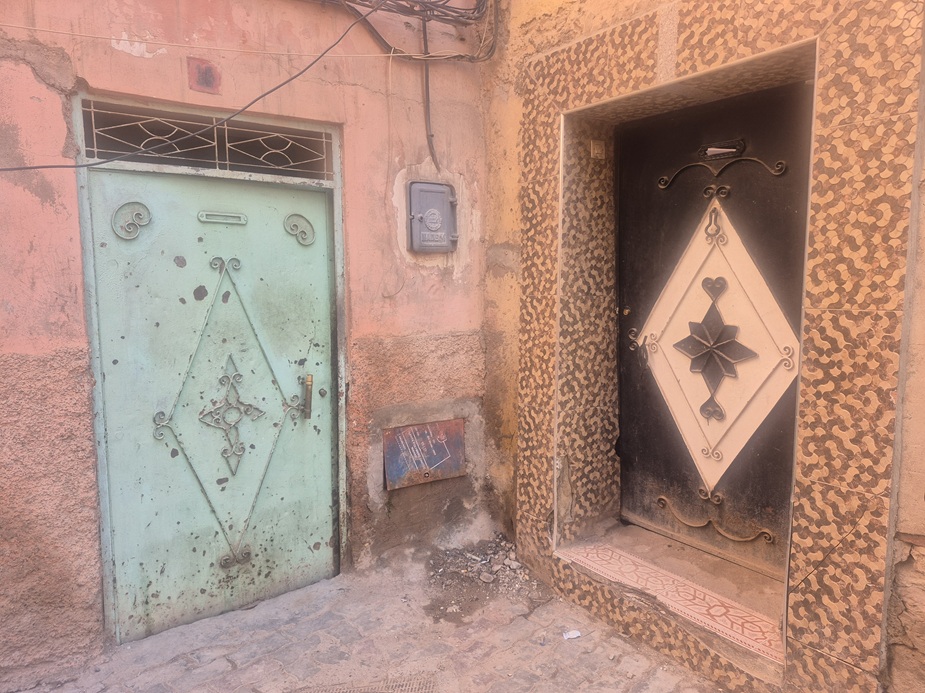
As I mentioned already, the likelihood is you will get lost at some point! But that’s all part of the fun. Plus there are some residential alleyways around the souks with beautiful, ornate front doors – each one completely different – that are great to see whilst you figure out what turn to take next!
The art of haggling
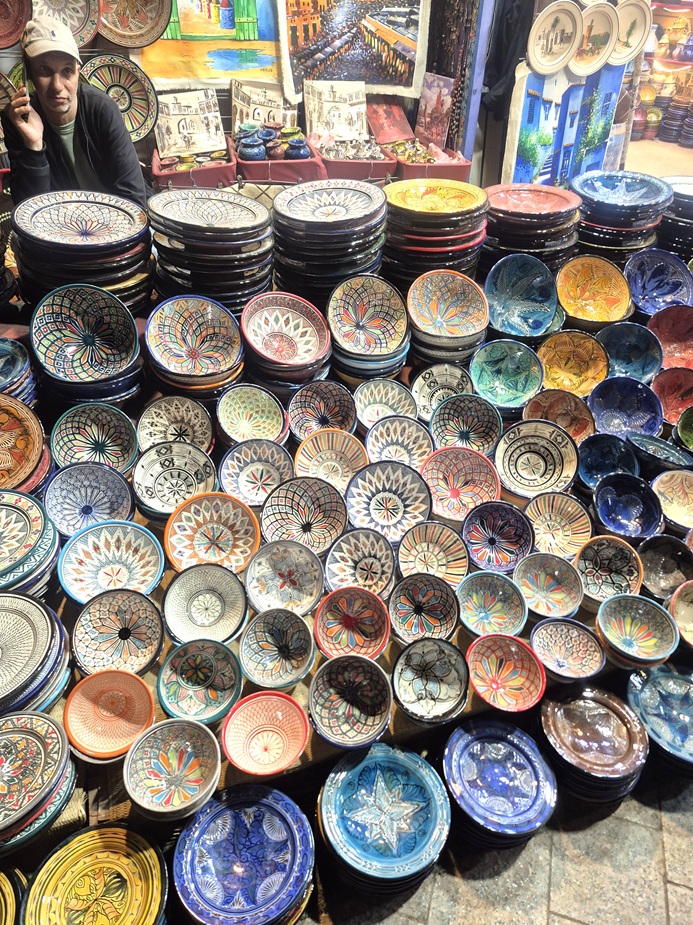
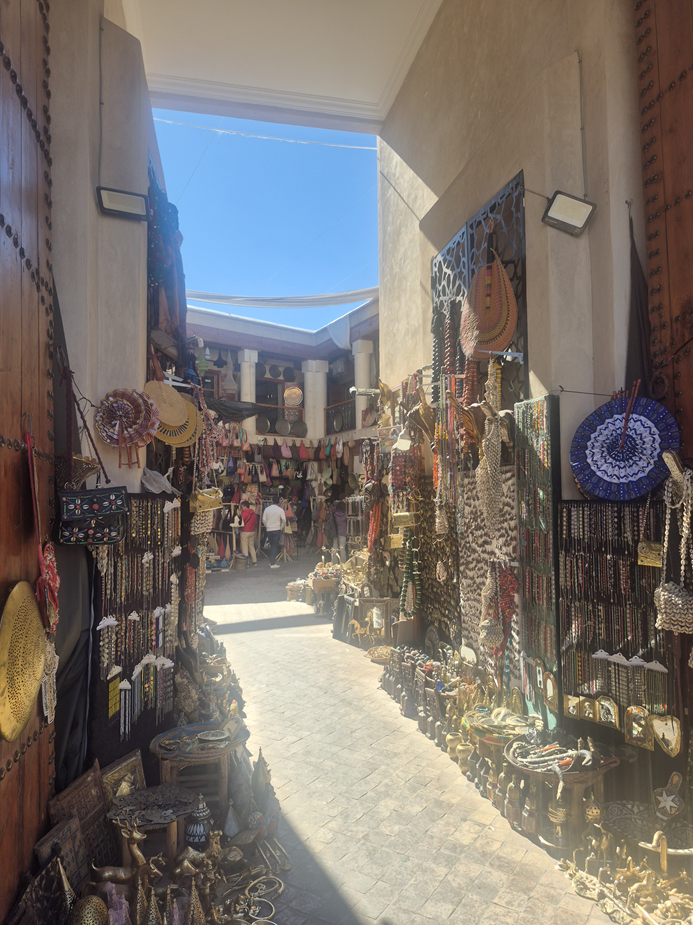
With an estimated 3,000 stalls in the souks of Marrakech, shopping is a very interactive experience. Here’s some tips:
- Cash is essential as most stalls don’t accept card payments.
- Keep money in different pockets so you don’t reveal a big wad of cash during haggling.
- Carry small denominations to avoid a “we have no change” scenario.
- Aim for 50% of the initial price when haggling.
- Only agree on a final price if you are ready to buy. Walking away after a price is settled is considered poor etiquette.
- Accepting mint tea is a sign of hospitality, but be aware it is also used as a subtle sales tactic to try and create a sense of obligation to buy!
- Smiling and being friendly/respectful is what it all comes down to. You should be able to politely say no and not feel pressured into buying something, but at the same time offering an offensively low amount for something is also not acceptable.
- If you really hate haggling, head to the Ensemble Artisanal instead (near Bab Nkob). It is a government-run complex where prices are fixed and clearly marked.
Etiquette and safety in the souks
What to wear
Shorts / dresses / skirts and t-shirts are fine to wear, but being a Muslim country it is best to cover your knees and shoulders in this area to show respect. Lightweight fabrics are best, particular in summer when it can get excessively hot and busy.
Communicating with merchants
Merchants are often multilingual. While Arabic and Berber are local languages, you’ll find most speak fluent French and English, with many also knowing Spanish or German.
In Moroccan culture, the right hand is used for shaking hands and handling money. The left hand is traditionally considered “unclean” (used for personal hygiene). While locals are forgiving of tourists, using your right hand is a sign of cultural respect when haggling.
Taking photos
I took photos in the souks (as you can see in this blog!) but I didn’t take excessive amounts – I wanted to still enjoy the experience and not be on my phone the whole time. It’s also quite hard to take photos without getting in other people’s way, or in a motorbike’s way!
I tried my best not to get local people’s faces in the photos out of respect, if you wanted to specifically photograph a person it is best to ask for their permission. As I mentioned in my guide to Marrakech, in the main square (Jemaa el-Fnaa), monkeys and snakes are abused for entertainment purposes and if you take photos of them, you will be expected to pay. It is best to stay well clear.
Safety in the souks
The alleys are narrow and despite signs telling them not to, people on motorbikes will speed down them. You may also see donkey carts doing deliveries too. Try and listen out for horns or people shouting “Balak” (watch out), be aware of what’s coming up behind you, and move safely to the side out of the way.
Scammers unfortunately are common here. Ignore claims from those saying that “the road is closed” as they will try and give you a “shortcut” which ends up with you being led to a shop owned by one of their relatives. Politely say “I know the way” and continue.
Best times to visit the souks
The “Golden Window” to visit the souks of Marrakech is between 9-11am before it gets busy and too hot. I would suggest visiting at least once in the day and once at night though as the atmosphere is very different. Jemaa el-Fnaa especially comes to life at night. Note that many shops close Friday afternoons for prayer.
Guided tours of the souks
If you’re unsure about exploring the souks of Marrakech yourself, you can book a guided tour. There are different types of tours available including artisan craft tours, historical medina tours, and street food tasting tours.
Legally, all official guides in Morocco must be licensed by the government and wear an official badge on a lanyard. Avoid “fake guides” who approach you on the street offering tours. You can book tours online on sites like getyourguide.com and viator.com.
Tours usually last around 3 hours and can make you feel more at ease knowing you’re being led around by an expert, and are less likely to experience heckling or high-pressure sales tactics.
I hope this guide covers off everything you need to know ahead of visiting the souks. As I mentioned before it is an amazing, high-energy experience where you can truly get a feel for authentic Marrakech. If you have any questions on something I haven’t covered, just let me know in the comments!

Sophie is a freelance writer and editor, and the founder of Britain and Beyond.
