#ad – I was offered free entry to Exbury Gardens in exchange for an Instagram post. This blog post was not part of the arrangement but I loved the gardens so much I had to write about them!
Exbury Gardens at a glance:
Open season: Early March to end of October.
Best time to visit: Late April to mid-May (to see the world-famous Rhododendrons).
Must see: The Steam Railway.
Dog friendly? Yes (on short leads, even on the train!).
Booking tip: Save 10% by booking online in advance.

Anyone who has visited my blog before will know that I’ve been lucky enough to visit quite a few gardens in my time, and Exbury Gardens are truly some of the most beautiful and peaceful gardens I’ve visited! The colours were so vibrant and the incredible layering of different flowers and plants made for captivating photos. It’s a must-visit destination for anyone seeking solace or inspiration in nature! Here’s everything you need to know before visiting.
Where is Exbury Gardens?
You can find the gardens located in the village of Exbury, not too far from Southampton in Hampshire. The gardens are spread across 200 acres of land within the New Forest National Park. The New Forest itself is a picturesque part of England, filled with wild horses and donkeys, that is a very popular holiday destination.

When do Exbury Gardens open?
The gardens are open from mid-March through to the end of October. They open at 10am daily, with last admission at 4.30pm, and the gardens close at 5.30pm.
What is there to see at Exbury Gardens?
Exbury Gardens is renowned for its collection of rare and exotic plants and immaculate horticultural displays. There are several different areas of the gardens to explore. Some of the highlights include:

The Azalea Bowl
This was my favourite part of the whole gardens – the colours were out of this world! It was so peaceful too, hearing the birds chirping in the trees. If you’re not able to able to do the full route around the gardens, then I’d prioritise visiting this part. This area was originally built in 1964 so plenty of love and gardening expertise has been poured into it over the years.
The Japanese Bridge
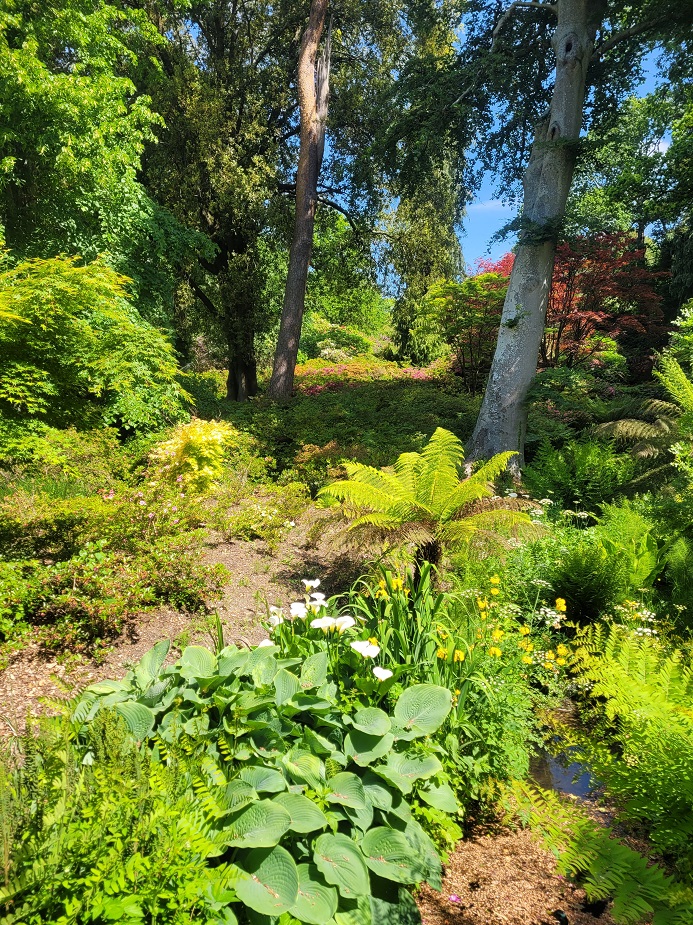
I love Japanese style gardens and bridges (this was my favourite part of San Francisco’s Golden Gate Park too!). The above shot is the stunning view standing on the Japanese bridge at Exbury looking up towards “Mrs Lionel’s Seat”. You can really see the expertise that has gone into maintaining this area of the gardens. The different types of plants and trees and the way they are layered so they complement, yet don’t overshadow, each other is amazing. The gentle trickling of the stream adds to the serenity of this area even more.

The Top Pond
I love being by water so the Top Pond was another highlight for me. The water was so clear and calm and sitting by it would make an ideal picnic spot. The reflections of the bright flowers in the water were so pretty – I don’t think the photo above does it enough justice! I didn’t spot any fish myself, but according to the Exbury Gardens website, the pond is home to giant koi carp and golden orfe fish.

The Sundial Garden
This section of Exbury Gardens was much more formal. It was sheltered by a yew hedge border with neat paths and flower beds framing the area. A large sundial is placed on the floor in the middle. Although the sundial was nice, my eyes were drawn to the large pergola at one end, made of Portland stone and covered by captivating wisteria. A must-see on a visit!

The View Point
This part of the gardens I did not expect – when I saw a view point was listed on the Exbury Gardens map, I presumed it would be high up and look out over the gardens. As I got closer it became clear that wouldn’t be the case as the incline hadn’t increased. Out of nowhere, after walking through heavily planted paths, was this view of Beaulieu River, with a few boats bobbing along calmly. A view point indeed!

The Wiggly Tree
The Oriental Plane Tree is native to warmer climate countries such as Turkey and India, but was introduced to Britain in 1550. It isn’t particularly common but can be found in some gardens in Southern England. It’s affectionately been named the ‘Wiggly Tree’ at Exbury by children who have visited, due to the unusual and uncontrolled way it has grown.

How long is Exbury Steam Railway?
For a nostalgic experience, you can hop aboard the Exbury Steam Railway. This narrow-gauge railway takes you on a 1.5 mile journey through a small section of the gardens. I didn’t do this as I enjoyed the walking but I think it would be a nice experience if you’re visiting with young children. The railway does require an additional ticket to be purchased alongside the gardens admissions ticket.
Does Exbury Gardens allow dogs?
Yes, dogs are allowed if they’re kept on a short lead. They’re allowed on the steam railway too!

Who owns Exbury Gardens?
The story of Exbury Gardens begins with Lionel de Rothschild, a member of the renowned Rothschild banking family and a passionate horticulturist. Inspired by his love for plants, Lionel purchased the Exbury estate in 1919. He embarked on an ambitious mission to transform the Exbury estate into a horticultural paradise.
With the help of a team of skilled gardeners and landscapers, the initial focus was on planting rhododendrons and azaleas, which would later become one of Exbury’s defining features. Lionel’s passion and dedication saw the gardens continuously expand over the years.

During World War II, the gardens were transformed into a secret manufacturing site for components of the famous Mulberry harbours used in the D-Day landings. The war had a profound impact on the estate, causing some loss and damage to the gardens.
After the war, Lionel and subsequent generations of the Rothschild family were dedicated to restoring the gardens to their former glory and preserving them for future generations. In fact, both Lionel and his son Edmund were awarded the highest Royal Horticultural Society honour – the Victoria Medal.

Is Exbury Gardens National Trust owned?
No, Exbury Gardens has remained under the ownership and management of the Rothschild family from 1919 to this day. New garden areas, such as the Sundial Garden and the Iris Garden have been added, showcasing the family’s commitment to creating diverse and captivating displays that the public can continue to enjoy.

I hope this post has given you a good feel for what you can expect on a visit to Exbury Gardens! My Mum and I loved our visit. From Lionel de Rothschild’s ambitious dreams to the ongoing dedication of the Rothschild family, you can’t help but delight in the curated displays of plants and flowers. The place truly showcases the beauty of horticulture and has such a lovely energy to it.

Sophie is a freelance writer and editor, and the founder of Britain and Beyond.
