Marrakech at a glance:
- Travel time: 3hrs 30mins direct flight from London.
- Vibe: Electric, ancient, high-sensory.
- Top must-see: The Medina (Old City) made up of the ancient souks.
- Best for: Architecture and design lovers, culture seekers, creatives, foodies.
As a first timer in Marrakech (and Morocco in general), I didn’t really know what to expect other than a couple of pretty buildings I had seen on Instagram. When I arrived, it was unlike anywhere myself (or my Dad who came with me) had been before! I wanted to write this guide to Marrakech to cover all aspects – the good, the bad, and the ugly – so other first timers have a better understanding of what to expect.
Guide to Marrakech – Many reasons to visit
Incredible design and architecture
Firstly, I’d like to say that my trip was overwhelmingly positive and I’d definitely recommend visiting. For me, the main draw to visit Marrakech was the design and architecture and it didn’t disappoint. The variation of things to see is amazing and the whole place really is a feast for the eyes.
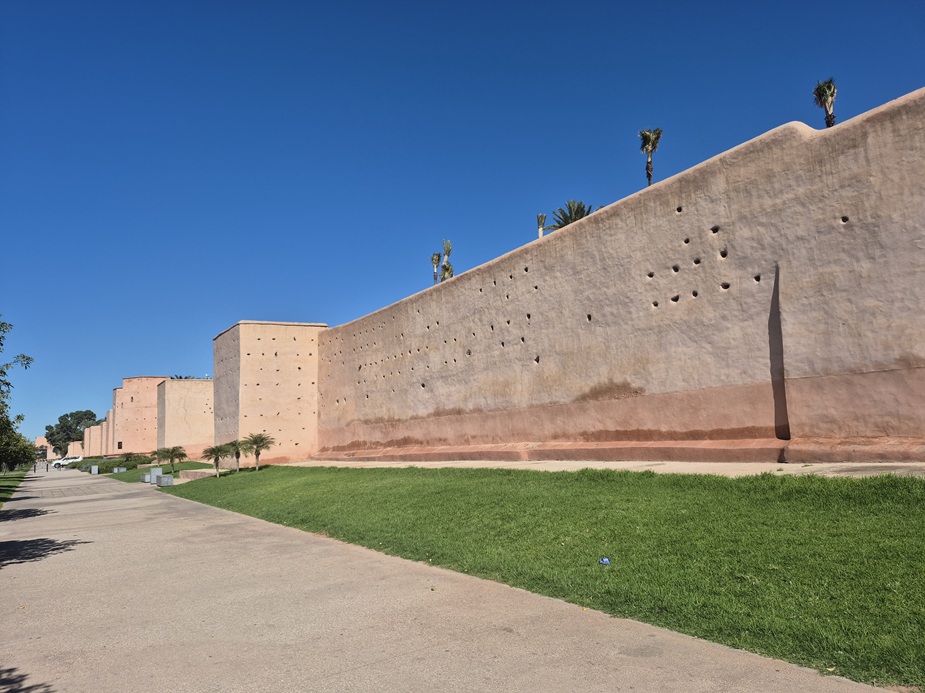
Walls of Marrakech
The walls are the first major piece of history you will see when you enter Marrakech. They stretch for nearly 12 miles (19km) and are the reason Marrakech is nicknamed the “Red City.” They are made of pisé (rammed earth), a mixture of red clay and lime. This material is incredibly durable but also breathable, helping to regulate the temperature inside the city.
There are 20 main gates, known as “Babs,” which act as the city’s historic checkpoints. These archways, many of which are elaborate, are no longer used alongside the walls as a means of fortification. Instead they blend into the expanded city now, some leading into marketplaces or hotels, and others standing simply as historic monuments.
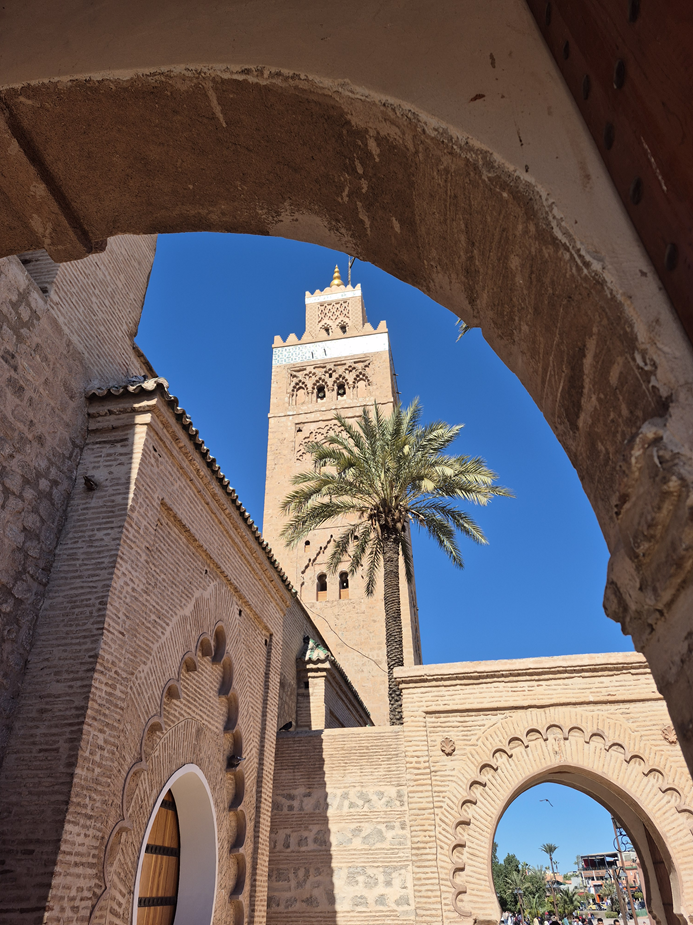
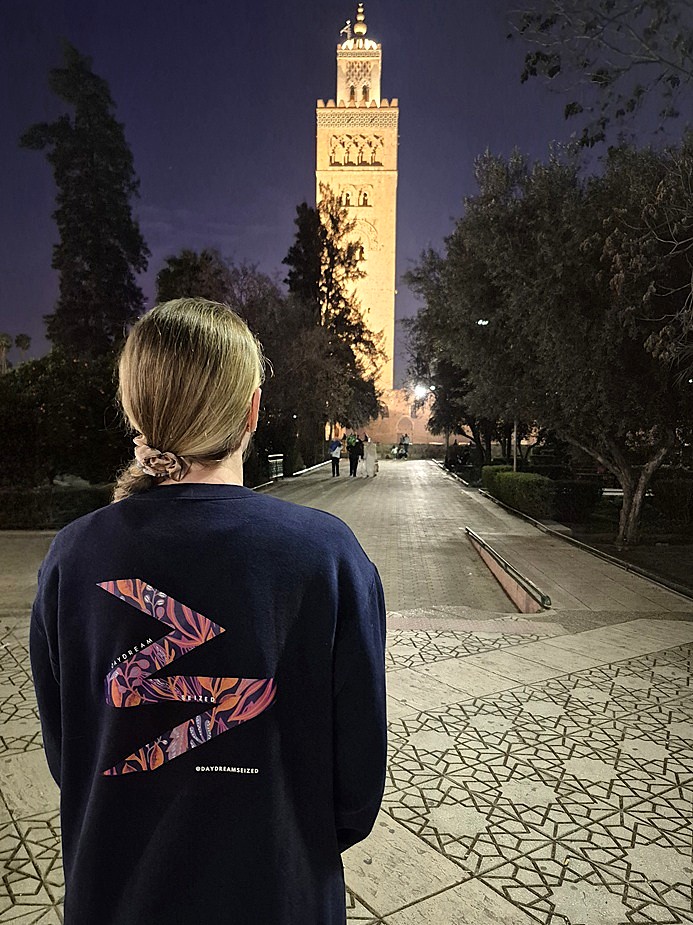
Koutoubia
Like the walls, Koutoubia is another landmark you’re likely to pass multiple times on your trip. It is the largest mosque in Marrakech and its 77-metre minaret is visible from many parts of the city. The first iteration of the mosque was built in 1147, but it was then rebuilt again around 1158-1195 (I’m not sure why the first one wasn’t deemed good enough!). The interior is reserved for Muslims only, but the exterior and the archaeological remains of the original mosque can be admired by everyone in the city. It’s a beautiful spot to visit day and night.
Fun fact: The mosque’s name derives from the Arabic word “kutubiyyin” which means “booksellers”. Historically, up to 100 booksellers worked in the streets at the base of the mosque.
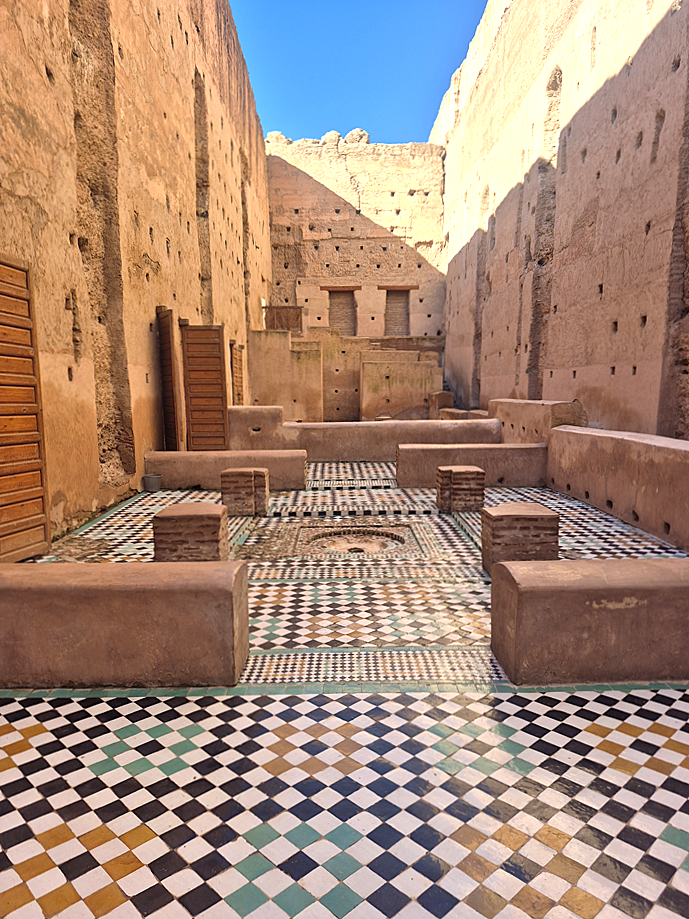
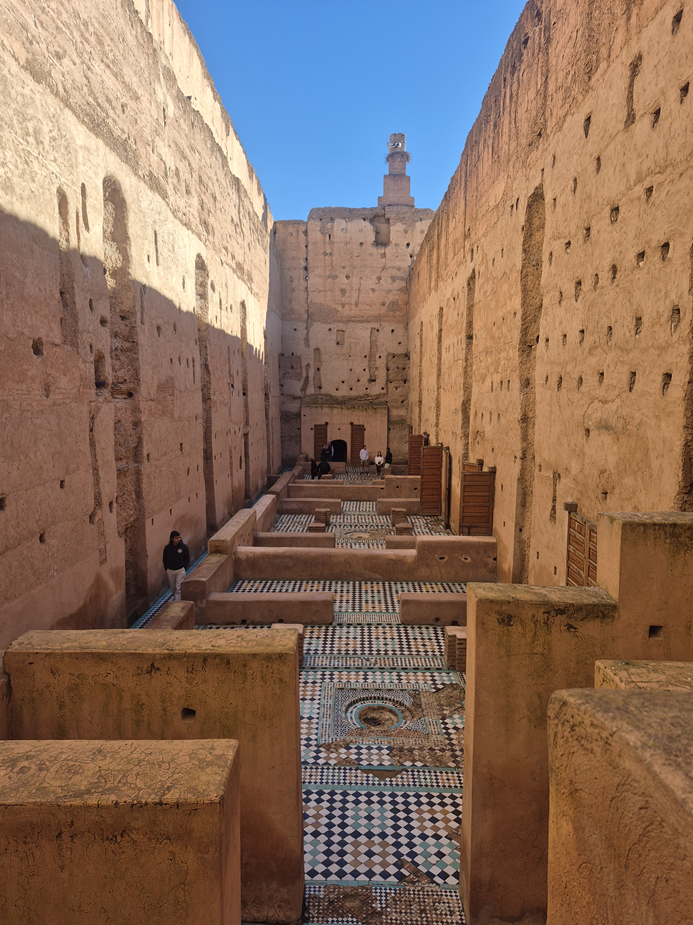
El Badi Palace
Commissioned by a Sultan back in 1578, El Badi Palace was once paved with gold, turquoise, and crystal. The site was stripped a century later to build Meknes (Meknes was then the capital of Morocco for 55 years before it returned to being Marrakech again, and today the capital is Rabat). The palace is a ruin and inhabitable now, except for the nesting storks who have made the high walls their home.
There are still some pretty tiles intact, and you can see the big sunken gardens which are still looked after. Other than that, there’s some museum-like exhibits in underground tunnels but there isn’t lots to see here. The entry fee is minimal so if you have time I’d suggest having a look. But if you can only fit one of the palaces into your visit, then Bahia is a better bet.
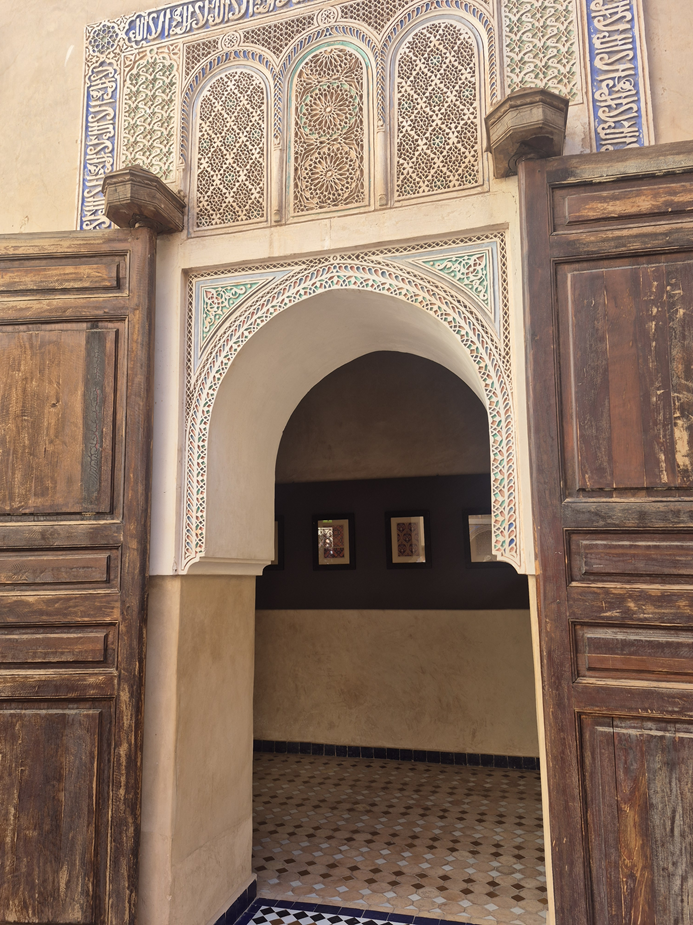
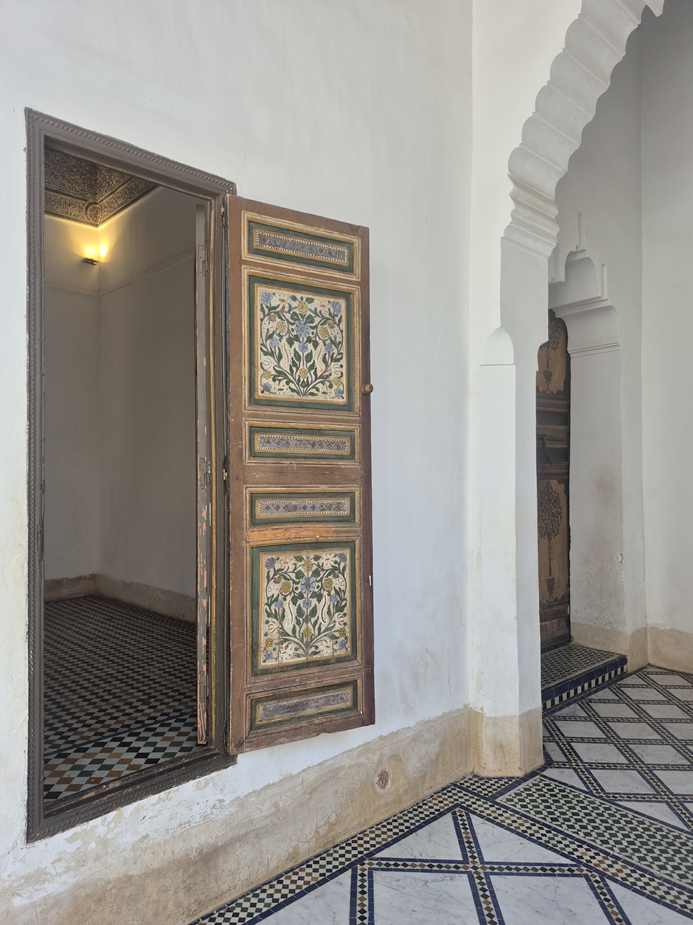
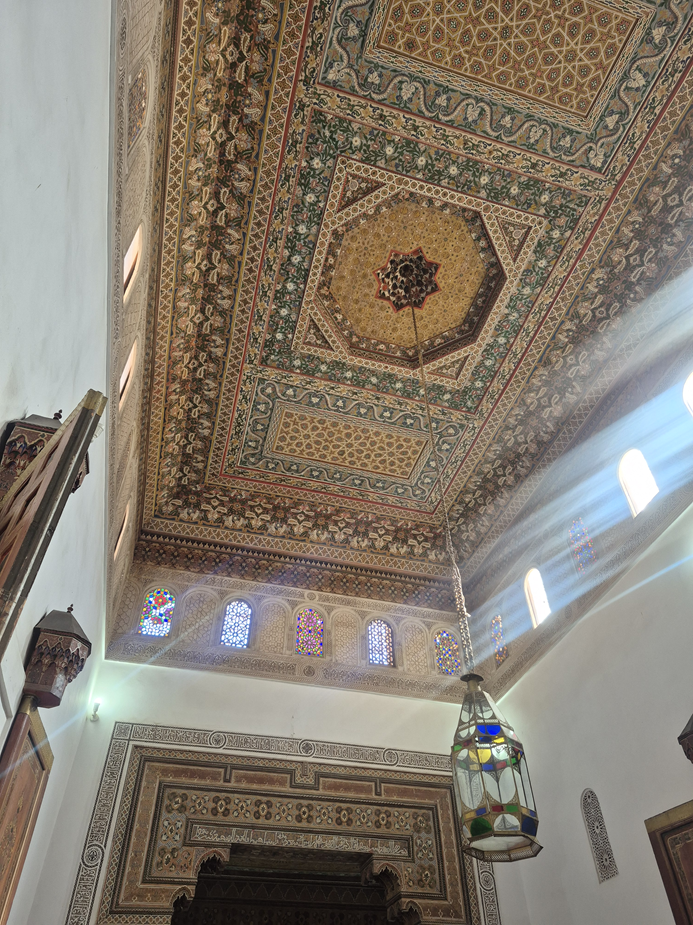
Bahia Palace
Built in the late 19th century, the Bahia Palace (its name means “brilliance”) has an irregular layout comprising of approximately 150 rooms organised around multiple internal courtyards. The rooms are decorated with intricate tilework and marquetry, even on many of the ceilings. The most famous feature is the massive marble courtyard. Unfortunately when we visited a lot of renovation work was going on in the courtyard (as well as other parts of the palace) which did dampen the experience slightly. However, the entry fee was the equivalent of £8, so I still think the price is worth it.
Tip: Book your tickets in advance to avoid long queues, and arrive early. We got there late morning (we went to El Badi first) and it was very crowded. Because of the irregular layout of the palace, people don’t follow a set route and it gets a bit overwhelming as well as harder to photograph. If you want to visit El Badi too, do that second!
Gueliz
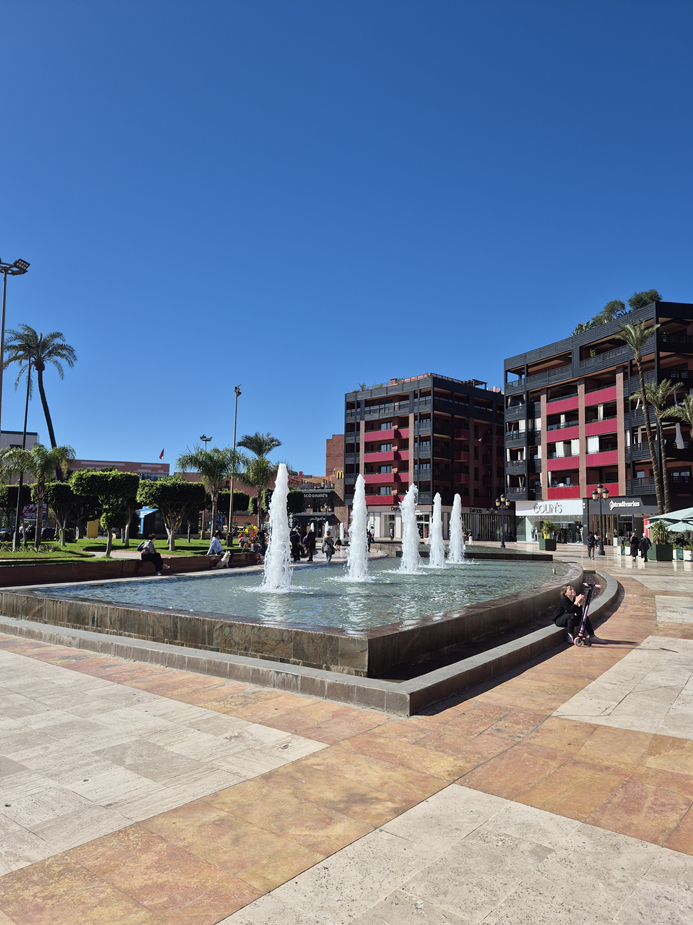
Gueliz is the neighbourhood at the heart of the “Ville Nouvelle,” or New City. It has a lot of hotels, restaurants, cafes, and a shopping centre. As you’d expect from it being the New City, it’s more modern and cosmopolitan with a very different vibe to the more traditional sites mentioned above. I wouldn’t say this area has any stand-out architecture but it’s nice to stroll around and slightly quieter (although none of Marrakech is particularly quiet!). There’s also lots of lunch and dinner options here and it’s where we had the majority of our meals.
Madrasa Ben Youssef
I’m really gutted I didn’t get to see this place, it was on the itinerary for our last day in Marrakech but instead I ended up spending the day in hospital (long story!). So I can’t comment on this place personally but the photos I’ve seen of it look beautiful and I’d recommend popping it on your to-see list.
Pretty parks and gardens
Having only seen a handful of photos on Instagram pre-visit (all of architecture and built-up areas), I hadn’t anticipated much greenery. I was rather surprised and delighted that there were so many parks and gardens to enjoy.
Park Lalla Hasana
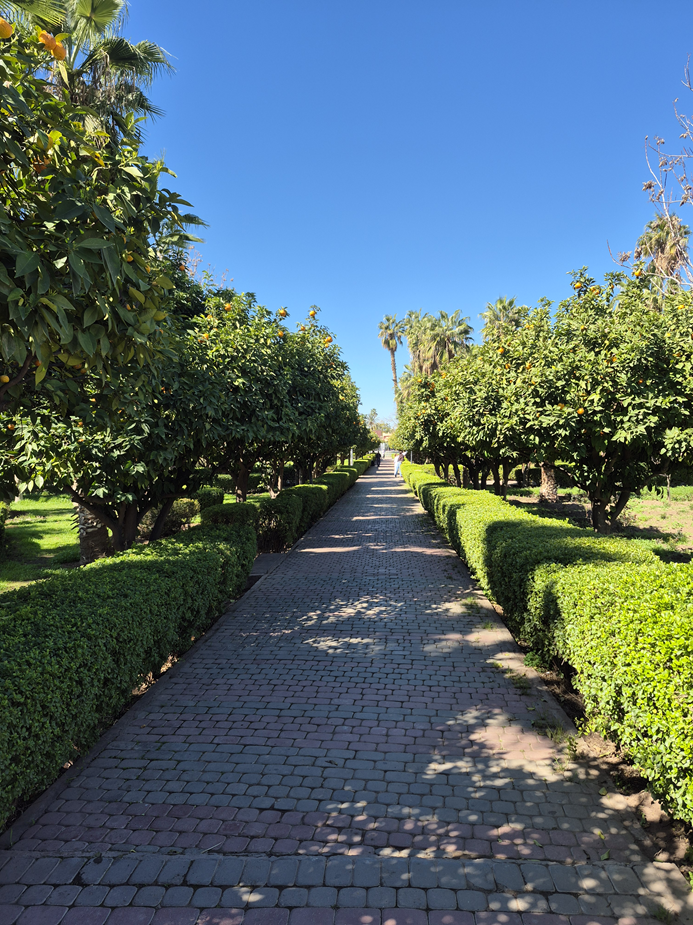
Located directly behind Koutoubia, Park Lalla Hasna is beautifully kept. It is lined with orange trees, and you’ll also spot palm trees, rose bushes, and a lovely mosaic fountain too. Because of its proximity to the city’s main landmarks, you’ll see many both locals and tourists using it as a resting point and taking advantage of the benches in the shade.
Menara Gardens
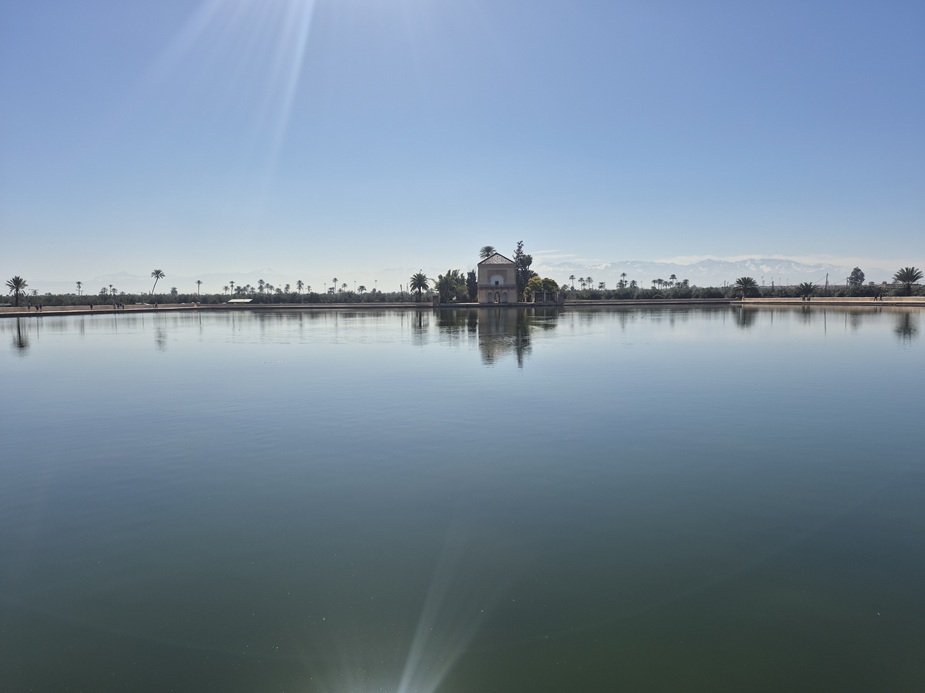
Found west of the city centre not far from the airport, the Menara Gardens are centred around a large reflection pool and a green-roofed pavilion. Established in the 12th century, the site was originally designed as an irrigation system for the surrounding trees. Today it’s a popular spot for locals to escape the bustle of the city centre, with its peaceful olive grove and backdrop of the Atlas Mountains. The gardens have been listed as a UNESCO World Heritage Site since 1985.
Top tip: If you enter at the back of the gardens on Rue el Iraq, you can walk through the olive grove and see the reflection pool and pavilion for free. If you enter at the official entrance on Avenue de la Menara, you have to walk through a guarded gate and buy a ticket to see the same thing!
Moulay Hassan Park
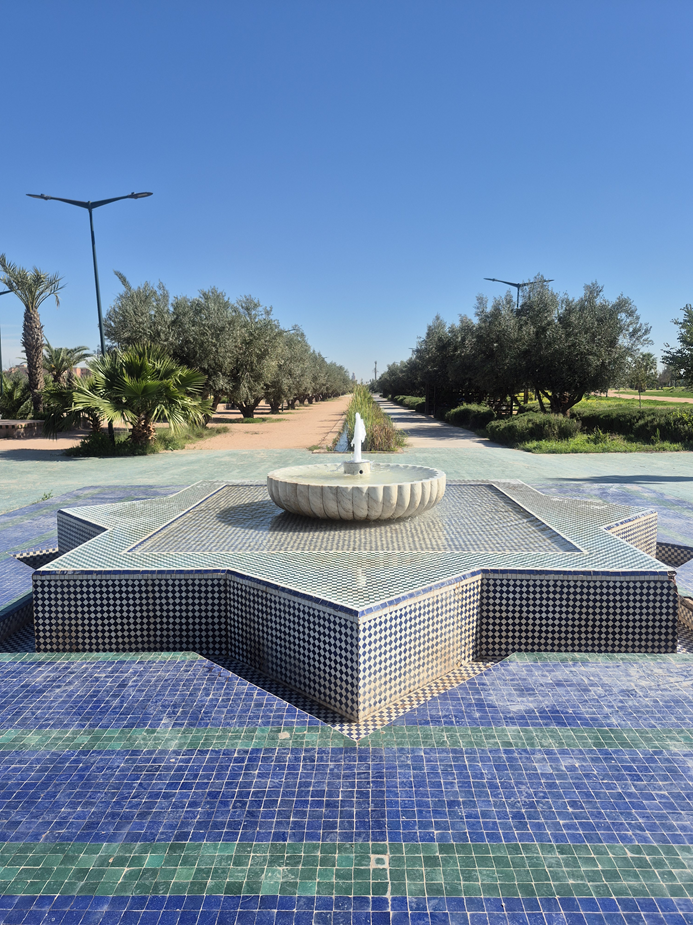
Moulay Hassan Park is situated near the Menara Mall – almost stretching the length from the Menara Gardens to Koutoubia. It’s a fairly new and modern park, with wide, paved walkways and open lawns. It’s frequently used for outdoor events and is surprisingly peaceful given that it runs parallel to a busy road.
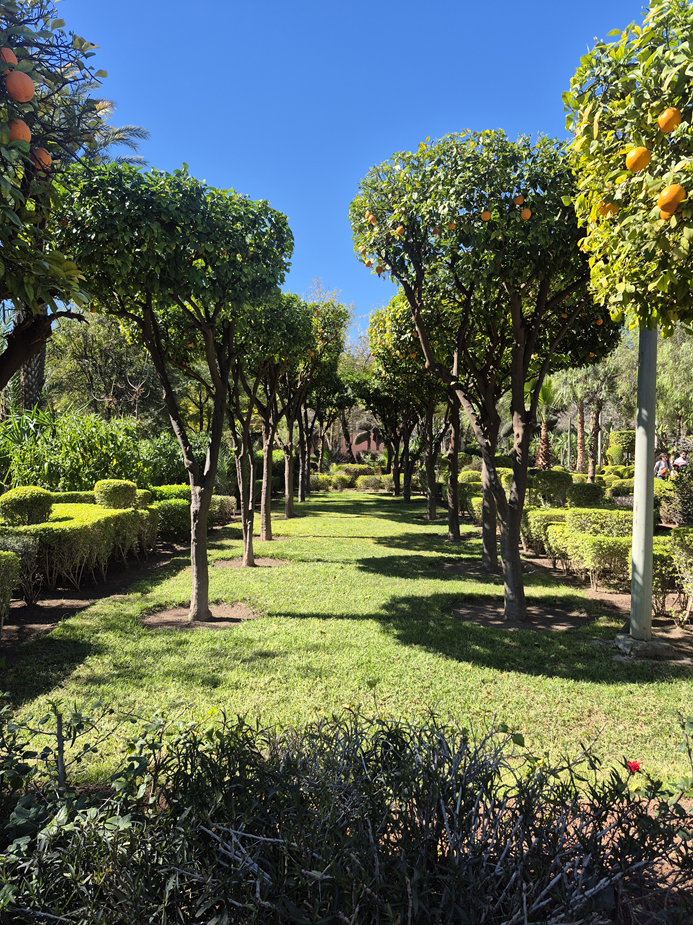
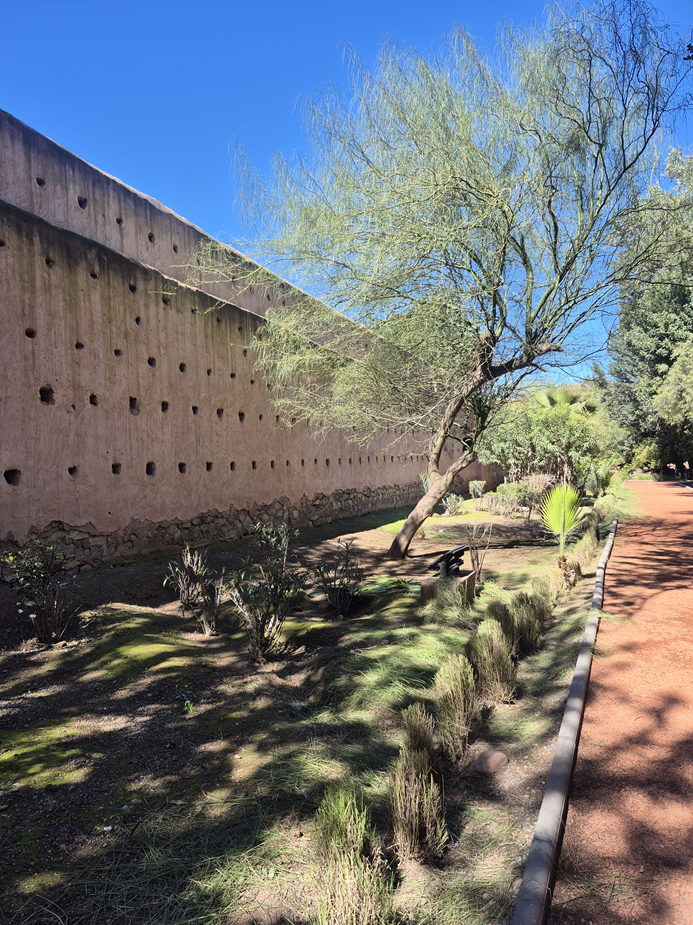
Cyber Park Arsat Moulay Abdeslam
Just down the road from Koutoubia is the Cyber Park Arsat Moulay Abdeslam. It’s rather unique in that you enter through a modern digital hub with free WiFi and interactive kiosks, into a traditional, manicured park from the 18th century. Part of the park features the historic walls of Marrakech, and there’s some nice shaded areas to cool down during the midday sun.
Jardin Majorelle
Unfortunately this was the one other place I didn’t get to visit due to my day in hospital. Jardin Majorelle is commonly known as the “Yves Saint Laurent Garden” as this is where the famous designer lived for a long period. The gardens are very popular and can get quite crowded from what I’ve seen online, almost to a point that it isn’t an enjoyable experience. If you want as few people around as possible, it’s best to book your tickets days in advance, and try to get an early morning slot.
The traditional markets of Marrakech
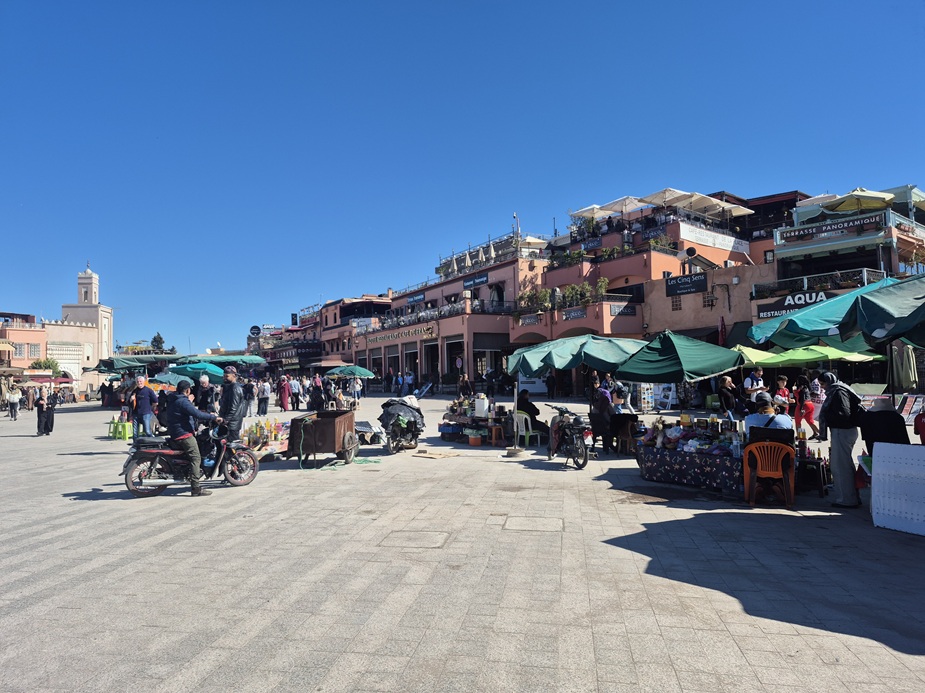
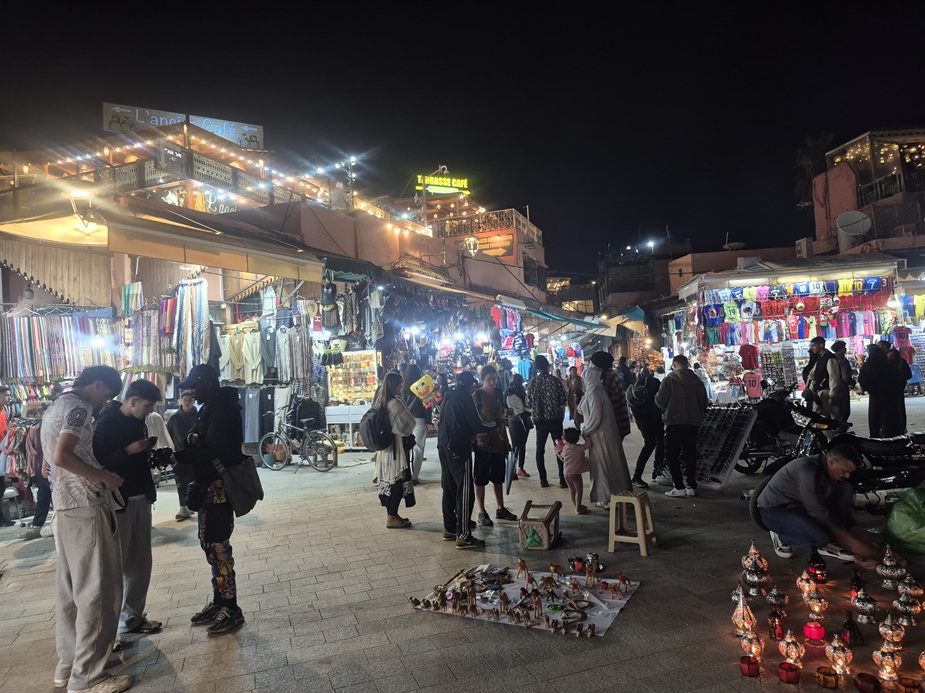
Jemaa el-Fnaa
Jemaa el-Fnaa is the main marketplace and the heartbeat of Marrakech’s Medina (Old City). This is where all the souks (described below) lead into. By day, there are a few stalls and performers around and some rooftop cafes you can enjoy, but it’s at night when it really comes to life. You’ll find live music, interactive games, food stands, and plenty of fresh fruit juice stands (I highly recommend the peach!). With all the sights, sounds, and smells, it really is a sensory overload but in the most energising way. You can’t visit Marrakech without heading here.
The souks of Marrakech
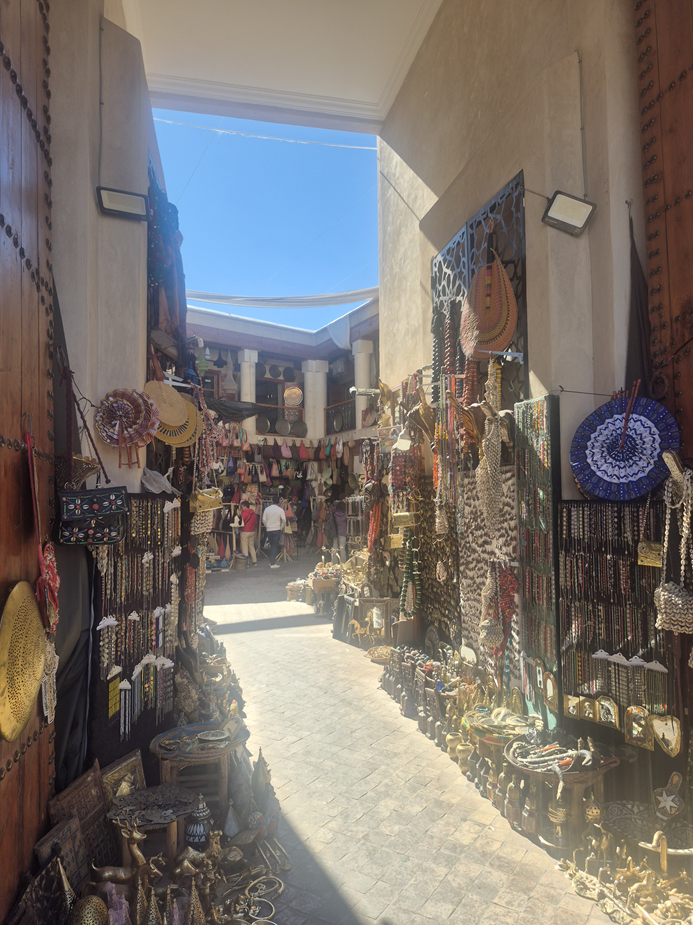
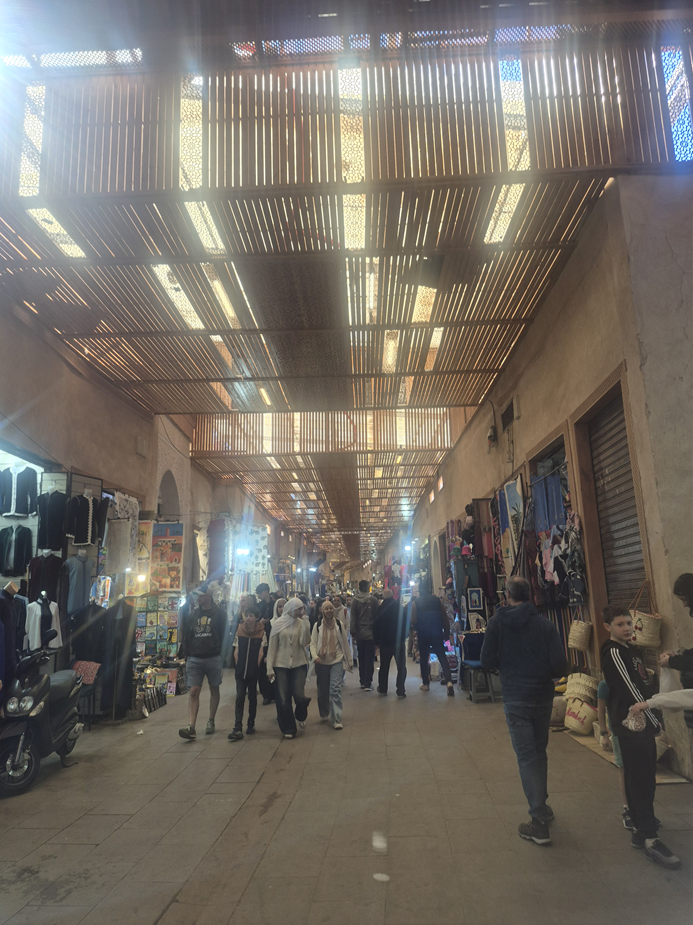
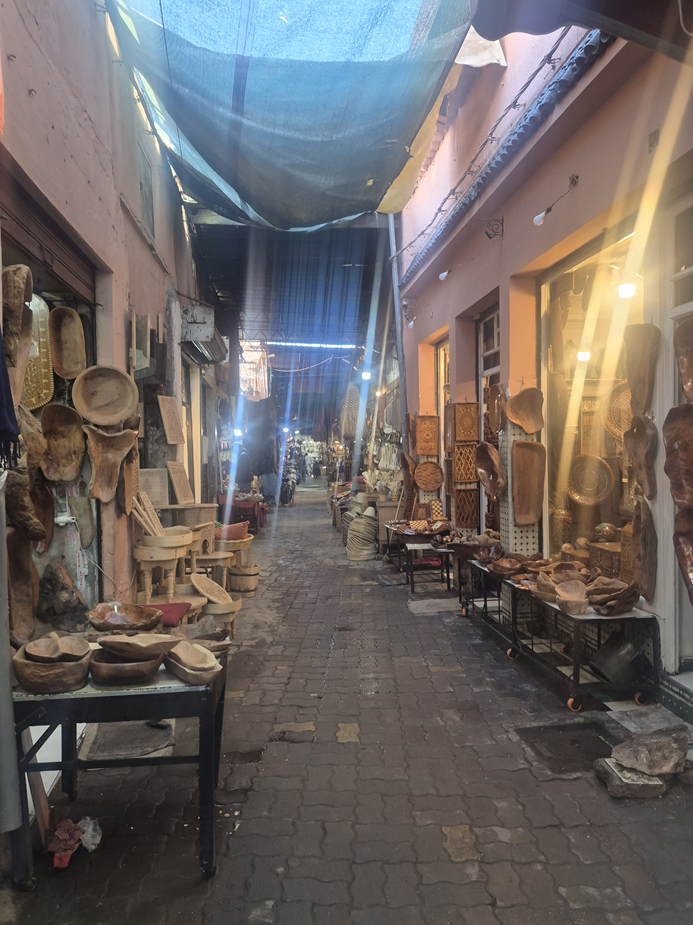
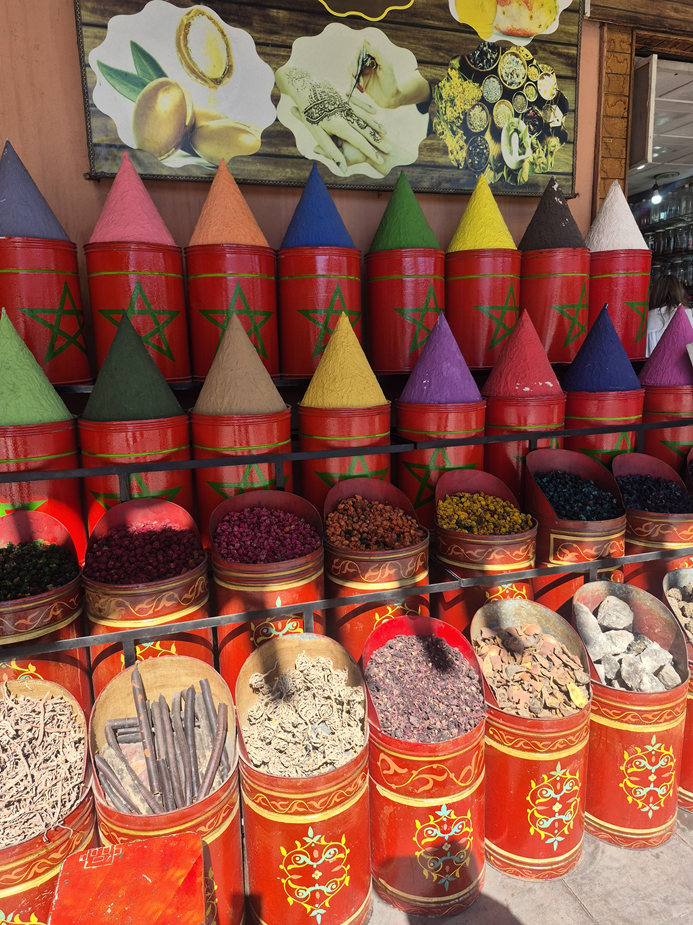
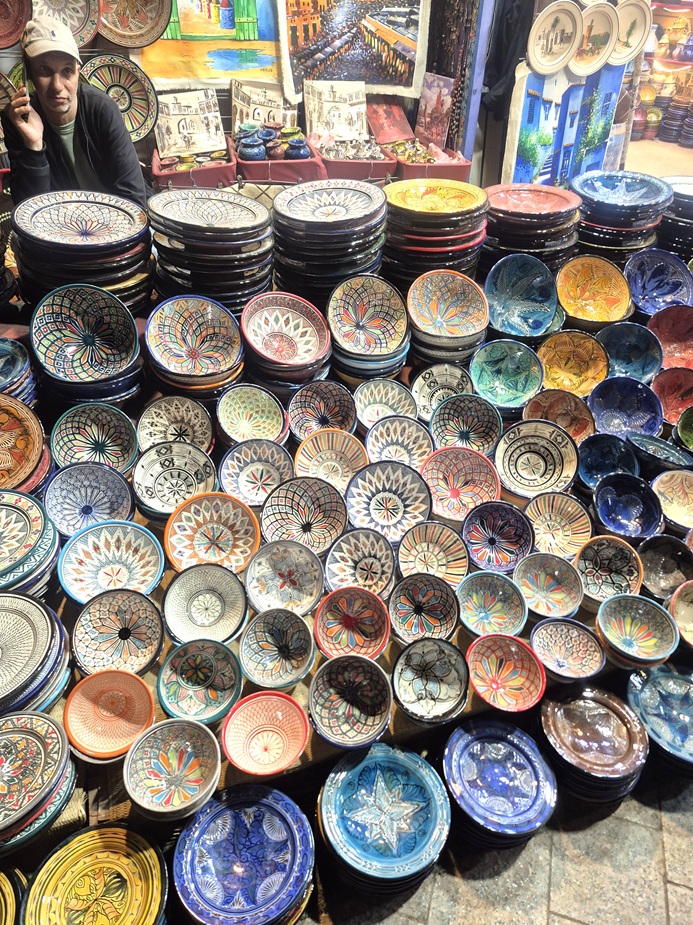
Another thing I loved was the souks of Marrakech. These are the alleyways that feed off of the main marketplace. You are guaranteed to get lost but it’s all part of the experience. Each souk sells different things – from food and spices, to textiles and clothing. It’s really a brilliant experience wandering around, seeing artisans at work, and a true insight to the traditional Marrakech. You will even see donkey carts transporting items around like they have done for centuries.
The only thing about the souks I didn’t love was the motorbikes and mopeds – there are signs that they aren’t allowed to drive down the narrow streets but they do so anyway. You do have to be aware of your surroundings in that respect, but I never felt unsafe in regards to having my phone out or wearing a rucksack despite how busy it was.
Other great things to note
Variety of food
We didn’t have a bad meal the whole trip. The majority of restaurants have been set up to cater to tourists so have vast menus and you’re guaranteed to find something you like. The prices are really reasonable and you tend to get decent-sized portions too.
Sunshine
Of course the weather is another draw, particularly for those of us who have to suffer long, dreary winters. We visited in mid-February and the weather was between 23c-25c every day. This was perfect as it was warm, but not so hot that we had to acclimatise. I did see a few weeks after we got home though that there were some crazy storms so perhaps we got lucky! Spring/Summer is your best bet for (almost) guaranteed sunshine, but it can get extremely hot.
Cats of Marrakech
I couldn’t write a guide and not mention the cats! I love cats and they were everywhere, so to me this was a plus (perhaps not if you have an allergy or are scared of them). The cats don’t tend to belong to anyone as pets they just roam the streets, but because they are seen as sacred in Islamic culture they are very well fed by the locals. We’d spot lots of little Sheba-type pots lying around which was sweet!
Guide to Marrakech – the bad side to watch out for
Haggling in Marrakech
Haggling may not be a bad thing for everybody, and it’s definitely a great way to try and get a bargain! But for me personally, I don’t feel confident doing it. Most items for sale in the souks purposely don’t have prices on so you have to enquire and then proceed to haggle. You should be stern when buying tea or spices as they won’t necessarily ask you how much you want and will start filling up bags out of eye shot before weighing it in front of you. This is what happened to us and we were asked for the equivalent of £100 for some teas – this was a definite no! We ended up getting the portions and price down to about £30 (still more than we’d ever spend on tea at home though).
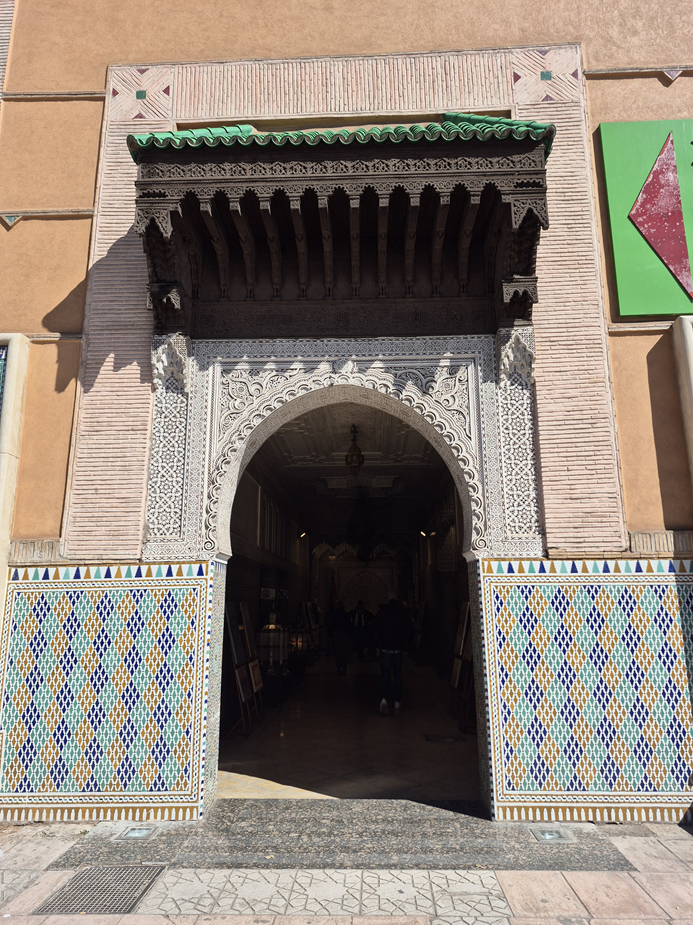
If you’re like me and don’t really want to be haggling, you’re better off heading to Ensemble Artisanal (pictured above). It’s a Government-run marketplace where apprentices train in traditional crafts (you can often see things being made as you walk around). Everything has a price tag so no haggling is required, and the staff are happy to help and show you things without it feeling as pressurised as the souks. There are also two malls to visit, Carré Eden or Menara Mall, but they don’t have many traditional items.
Lack of road/pedestrian safety
There doesn’t seem to be any sort of road safety in Marrakech. The traffic is genuinely 24/7, and even at zebra crossings and traffic lights, drivers won’t stop for pedestrians. It’s a case of just having to go for it, step out in the road and act like you own it, even with vehicles coming towards you. As I already mentioned, motorbikes will weave in and out of the souks (even though they aren’t supposed to) and in parks too.
I didn’t see any accidents when I was there and I can’t say that I felt really unsafe or anything, but it’s something to be mindful of before visiting, especially if you have mobility issues or bringing children. If you’re thinking of hiring a car, I’d suggest rethinking! You’re better off ordering Ubers, the drivers are friendly and know how to navigate the roads. In Marrakech drivers stop ON the roundabout to give way to people entering it. It’s not very logical and unlike anything I’ve seen anywhere else!
Lack of road names
As well as lack of road safety, there is a distinct lack of road names! My dad and I got lost several times (although this is part of the fun really). We couldn’t access Google Maps on our phones due to data issues so we tried the old-fashioned way using a paper map. So many roads didn’t have a name on though, it was hard to tell if we were on the right track or not. This is how scammers (mentioned further on) prey on tourists who are obviously lost.
Guide to Marrakech – the unfortunate ugly side
Animal welfare
Given how loved and looked after the local cats were, it was extremely sad and angering to see other animals being abused for entertainment in Jemaa el-Fnaa. One stand had monkeys on chains. These monkeys are usually drugged and manhandled by the owners, forced to sit there in the heat with clothes on, and pose for photos with tourists.
Another stand had snake charmers. The snakes look like they’re “dancing” to flute music but actually the music triggers them to move that way because they feel threatened. The snakes often have had their fangs removed or their mouths sown shut, so they can’t hurt the snake charmer if they try and strike. This can cause infections, malnourishment, and even slow deaths for the snakes.
We saw these stands from a distance and kept away. If you look interested or engage with them in any way, they will approach you immediately. If you take photos, they will expect money. Please do not support this animal abuse and maybe one day it will stop.
Scamming
The majority of people we met in Marrakech were extremely friendly and helpful, but the likelihood is you will get approached by scammers. Some will approach you if you look lost and offer to give you directions, but then demand money. Some will offer you food – on our first day we had what seemed a kind old man offer us a “free” biscuit to taste, but then he demanded money once we took a bite. We didn’t give him any money and continued walking but we learnt quickly not to trust “free food” again!
We did have one interaction with a younger man, when we genuinely did need help with directions. He led us through the alleyways, telling us about his dad’s restaurant, facts about the area, and how he was wanting to practise his English.
He did get us to where we wanted, but before shaking our hands and departing, he introduced us to the owner of a tea stall and got us smelling different teas. I then realised he probably makes a commission on any sales made with the tourists he brings to them – sneaky! We did need some Moroccan mint tea though, so it wasn’t all bad.
I hope this guide to Marrakech has helped you understand a bit more about what to expect. Although there are some things to be aware of and it may be a bit of a culture shock, I really would recommend it as somewhere to visit. The good absolutely outweighs the bad, and the design, architecture, and colours everywhere make it a truly majestic place.
Guide to Marrakech FAQs (2026)
The airport is only about 5 miles from the centre. The most efficient way is a pre-booked transfer (usually around 150–200 Moroccan Dirham, which is £12-£16). If you’re on a budget, the L19 Express Bus departs every 20 minutes and drops you right at Jemaa el-Fnaa.
Arabic and French are the two main languages. Many people speak English.
Yes. While newer areas like Gueliz accept cards, the Medina where the souks and Jemaa el-Fnaa are, is cash only. The Moroccan Dirham is a “closed currency” meaning you can only take up to 2,000 Dirham (approx. £160) in or out of Morocco. The easiest thing to do is use ATMs or travel exchange bureaus when you’re there and get cash as you need it. You don’t want to have too much leftover at the end of your trip as it can be hard to exchange back.
If you take a photo of a snake charmer, a monkey, or a musician in Jemaa el-Fnaa, they will demand payment (often quite aggressively). If you don’t want to pay, don’t point your camera at them.
The “Golden Window” is between 9-11am. This is when the shutters are just opening and the light filters through the slatted roofs, but before the narrow alleys become congested with motorbikes and crowds.
Morocco is a Muslim country, and you won’t find alcohol in the souks or supermarkets inside the Medina. Many bars, restaurants, hotels, and Riads have licenses. Just remember it is illegal to drink in public or be visibly drunk on the streets.
Marrakech offers excellent value. Most tourist attractions are around 70-100 Moroccan Dirham (around £7-£10). Places like Koutoubia, Jemaa el-Fnaa, the souks, and the parks are all free. Eating out at a mid-range restaurant is affordable (dinner per person is around £12-£15) and portion sizes tend to be generous. You can eat out for even cheaper in the souks.
Shorts and t-shirts are fine but as a sign of respect it’s best to keep your shoulders and knees covered, especially around Koutoubia and the Medina. Swimwear is fine if your hotel or riad has a pool.
Marrakech is generally safe for tourists, with a dedicated tourist police force and a low rate of violent crime. Most visitors only need to watch out for common scams like fake guides, and should stick to well-lit areas after dark.
Tagine is a slow-cooked stew named after the clay pot it’s made in, and Tangia is a local Marrakech specialty of lamb slow-roasted in a terracotta urn. Fresh mint tea is very common and is often handed out for free if you browse stalls in the souks.

Sophie is a freelance writer and editor, and the founder of Britain and Beyond.
