Canterbury at a glance:
- Travel time: Approx 1hr 30 by train or drive from London, 55 mins by high speed rail from London St Pancras.
- Vibe: Charming, quintessential, relaxed.
- Top must-see: Westgate Gardens – there are few places prettier in spring/summer for a riverside walk.
- Best for: History enthusiasts, architecture fans, day-trippers, café culture lovers.
Canterbury is a great city to visit if you want lots of things to do, but don’t necessarily want the hustle and bustle of a larger and more spread out city like London. Its cute cobbled streets and historic charm give an almost village-like feel to the city, even though it is a popular tourist destination.
Like many cities in Britain, there is history at every turn, with three different areas of the city making up a UNESCO World Heritage Site. It’s also home to three universities, giving Canterbury the highest student/resident ratio in the UK. As everyone tends to know about the cathedral already before visiting, I wanted to focus on the other great things to do in Canterbury, so here they are (in no particular order!).

Punting on the River Stour
The Canterbury Punting Company offers 45 minute tours through the city, along the River Stour. They offer different tours including a shared tour, private tour, wedding tour, ghost tour and even a hen party tour!
The tour takes a route not accessible by foot and your punter will give you a historic commentary of the different sights including the Poor Priests Hospital, 50 Yard Tunnel and Greyfriars Chapel.
The Crooked House
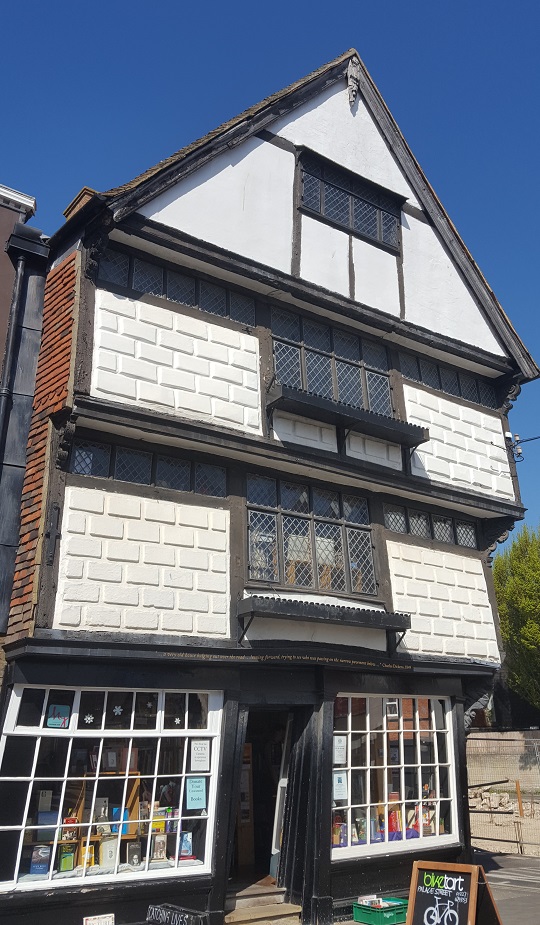
This unique monochrome building is definitely worth finding on a trip to Canterbury as it makes for an excellent photo opportunity!
Built back in the 17th century, the Crooked House (also known as Sir John Boys House after an MP who used to live there) has a skewed appearance due to an internal chimney slipping. A steel frame keeps the building in place so it is still safe to use, but it gives a very funny and somewhat whimsical appearance to the outside.
Over the years the building has been used an art gallery, instrument shop, school uniform shop, and is currently home to the Catching Lives Bookshop. It is run by volunteers and raises money to support homeless and vulnerably housed people in Canterbury and East Kent.
Beaney House of Art and Knowledge
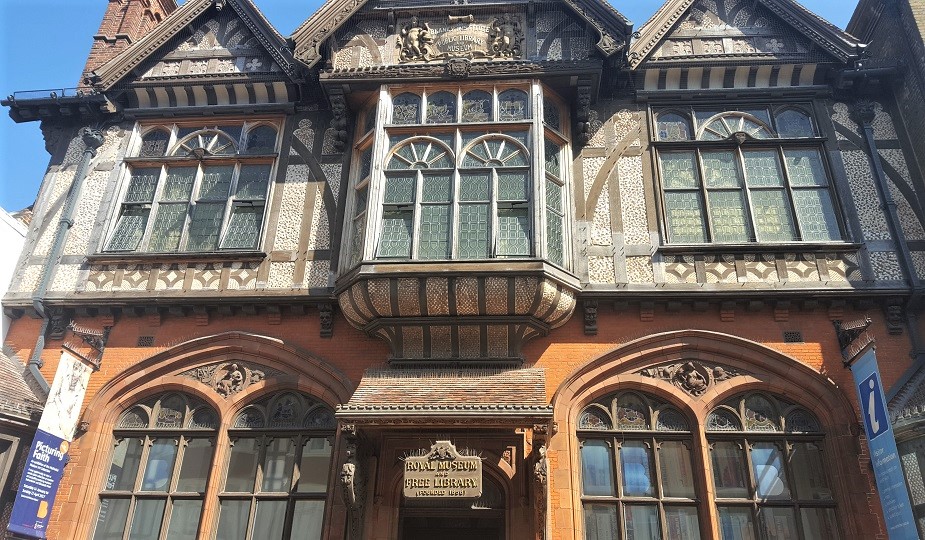
This grade II listed Victorian building is one not to be missed. Founded by a Canterbury physician, Dr James Beaney, it is a treasure trove of all things historical relating to the local area including old newspapers, maps, and illustrations.
The gallery also houses different collections including the cabinet of curiosities, people and places in the Canterbury area, and even global finds from around the world. There is a special gallery too which is devoted to the Canterbury born artist, Thomas Sidney Cooper, known for his paintings of farm animals.
Westgate Gardens
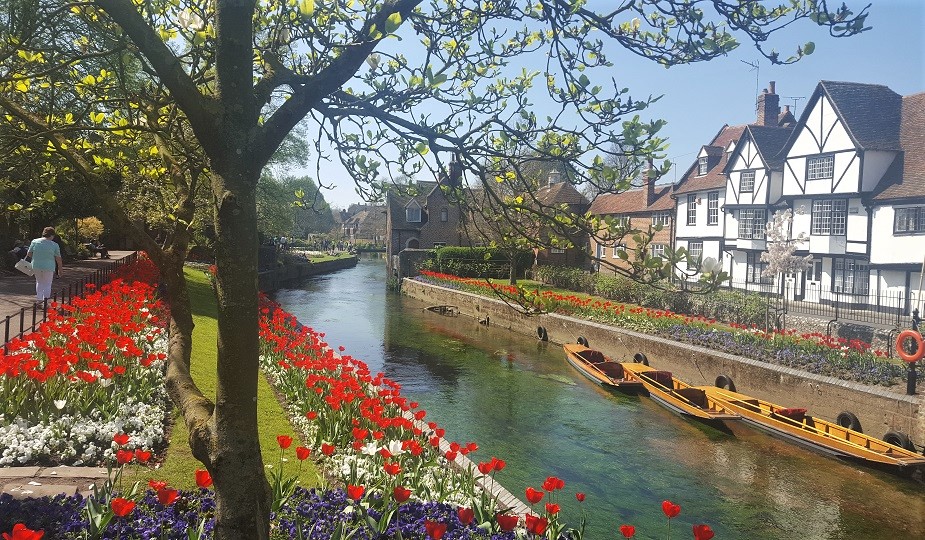
The gardens are situated next to the River Stour and look particularly pretty in the spring and summer months when the flowers are in full bloom. With the nearby historic buildings and visitors enjoying a punt down the river, it makes for a beautiful place to walk and there are plenty of photo opportunities!
At the northern end of the gardens are the historic Westgate Towers, England’s largest surviving medieval gateway. In fact these could be the 11th top thing to do in the list, as you can climb these and look out over the city – something I wish I had researched and done when I was there!
At the southern end of the gardens is Tower House, an early Victorian building that was formerly owned by the first female Mayor of Canterbury and now houses the Mayor’s offices. The gardens follow the course of where the Roman city wall once stood. Unfortunately there are no traces left of it today after it was destroyed for building projects during the Civil War.
Butter Market
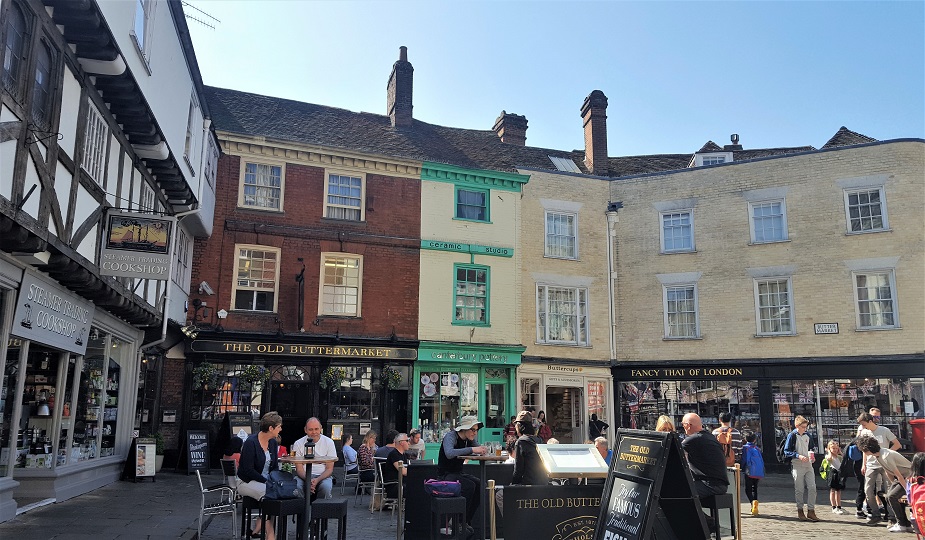
Small but sweet, this area of Canterbury is where the Christchurch Gate sits (mentioned below) as well as a World War One memorial and some pretty shop facades which I always love!
It’s home to the Old Buttermarket pub (a public house has stood on the site for over 500 years), as well as shops including Canterbury Pottery which has been going since 1963. There are lots of other shops worth visiting in the streets surrounding the Butter Market too.
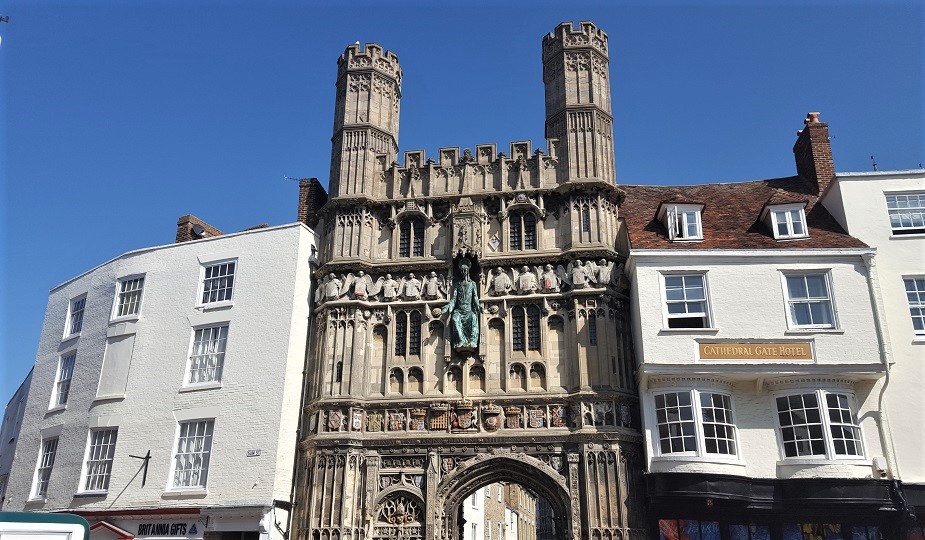
Christchurch Gate
A spectacle in itself, Christchurch Gate is grand, elaborate, and very fitting that it is the entrance to Canterbury Cathedral. It was originally built to celebrate the marriage of Arthur, Prince of Wales, to Catherine of Aragon in 1502. Unfortunately only a few months later Arthur passed away, aged just 15, and the gate wasn’t finished for another two decades!
Catherine meanwhile went onto marry Arthur’s brother, King Henry VIII, in 1509. Their marriage lasted for 24 years, although he sought to have their marriage annulled after all that time due to her not producing a male heir. He really was a delightful man wasn’t he.
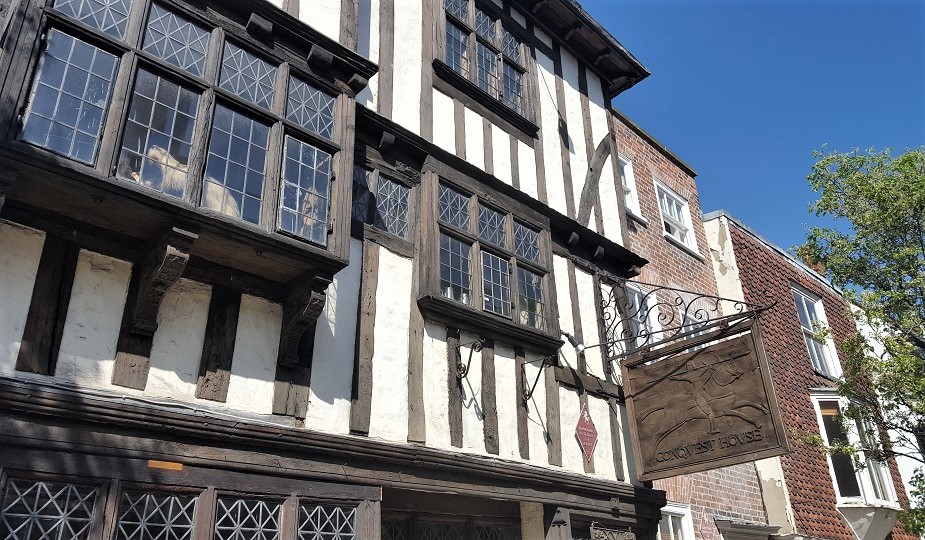
Conquest House
It was at this location that the knights who murdered Thomas Becket met the night before to discuss their evil plans, so is worth hunting down! There is a much older interior than that of which can be seen on the outside. The Tudor exterior and windows are still very beautiful, however the building dates all the way back to 1107.
Over the years it has been a shop, an art gallery, and housed accommodation. In 2020 it was up for sale for £1 million modestly described as a ‘two bed terraced house’ on Rightmove! It was also available for commercial sale too and I can’t seem to find out online what has happened to it since (if you know, please leave a comment!)
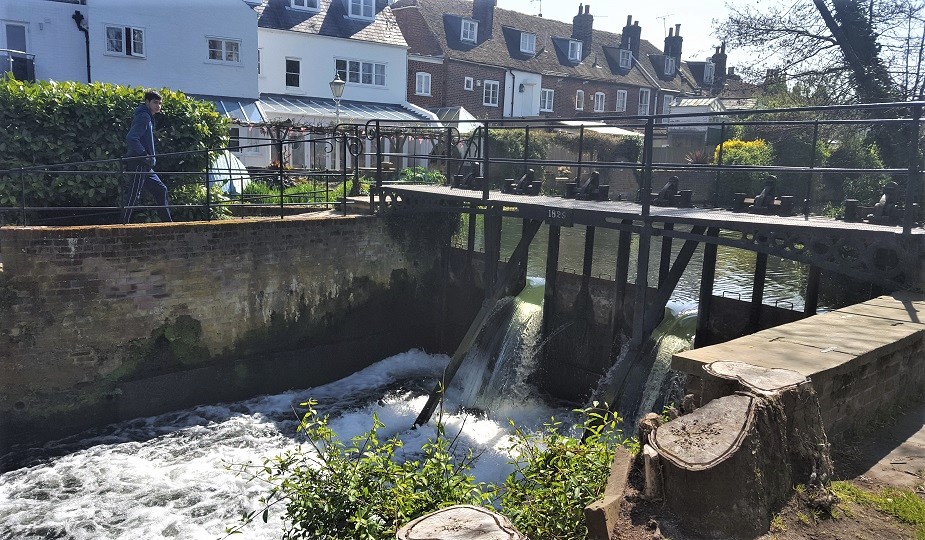
Abbot’s Mill Garden and Dam
This bridge dates back to 1829 and leads into Abbot’s Mill Garden which has some of the old iron mill workings in it. The mill was built in 1792 and was one of the largest buildings in Canterbury until 1933, when a massive fire ripped through it over the course of several days.
It’s a picturesque little area and there’s a few grassy places to sit too, if you want to relax and enjoy the sounds of the flowing water. It can be easy to miss, so I’d advise going heading The Friars where the Marlowe Theatre can be found, and then following the river.
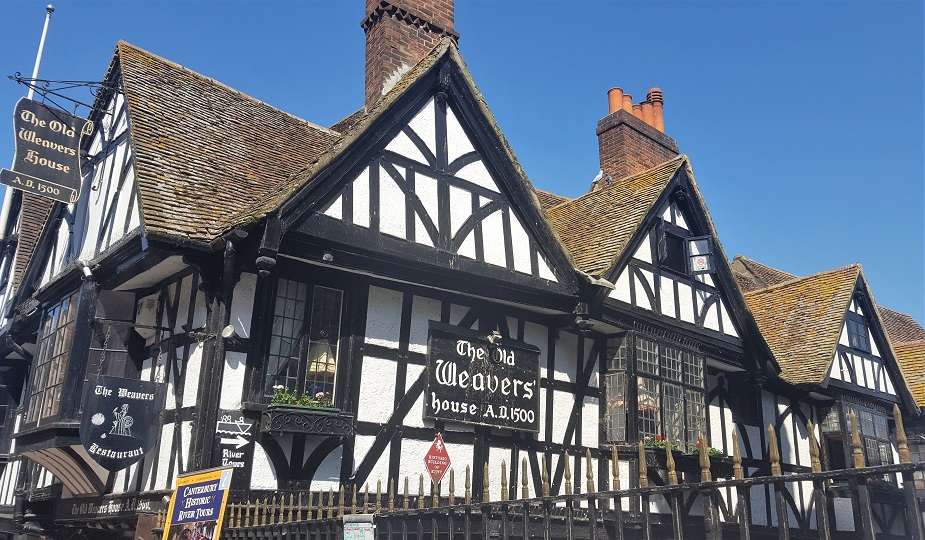
The Old Weavers House
This old building on the River Stour is another much loved and popular photograph opportunity in Canterbury. The foundations of the building were actually laid as far back as the 12th century, despite the sign on the side of it saying 1500AC. A lot of original features built throughout the years have still been retained inside too, with Tudor, Jacobean and Georgian influences.
Over the years the building has had many uses (it was originally split into three) including a laundry, dairy outlet, fruiterers, retail units and a weaving school. It is now a restaurant serving hearty meals like roast dinners, pies, and pasta dishes.
Canterbury FAQs (2026)
Extremely. The city centre is largely pedestrianised and very compact. You can walk from one side of the historic centre to the other in about 15 minutes.
While Canterbury is inland, the seaside town of Whitstable is only 7 miles away. It’s famous for its oysters and can be reached in 20 minutes by bus or train, or by cycling the “Crab and Winkle Way.”
May through to September has the best weather for enjoying the gardens and outdoor dining. December is magical for the Christmas markets and the festive lights in the narrow lanes.
Head to Mercery Lane for the classic view of the Cathedral gate, or explore The King’s Mile (Northgate and Sun Street) for independent shops and traditional timber-fronted architecture.
If you’ve been to Canterbury before and would add anything else to the list, please do share in the comments below!

Sophie is a freelance writer and editor, and the founder of Britain and Beyond.

Stunning! What fascinating history. I went on a school trip to Canterbury but don’t remember much. This post has made me want to visit right this minute! Thank you xxx
Author
Thanks for such a lovely comment and I’m so glad it made you want to visit, it is definitely a city full of history and stories! xx
Superb and well-thought-out content!