Bath at a glance:
- Travel time: 1hr 20mins direct train, or 2hrs 25mins drive from London.
- Vibe: Golden-hued, elegant, distinguished.
- Top must-see: The Roman Baths.
- Best for: Literature fans, spa lovers, architecture/history buffs, shoppers.
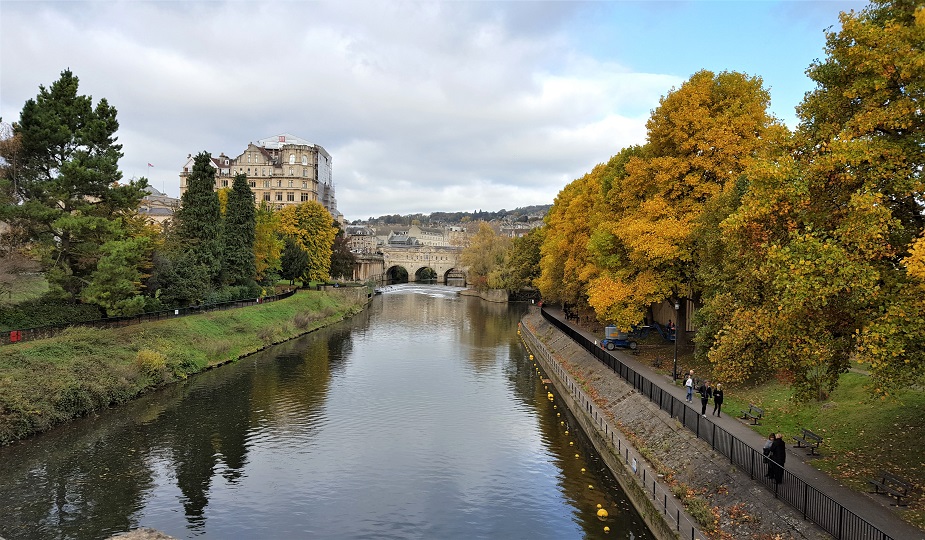
I visited Bath in Somerset one Autumn after wanting to visit for years. I tend to prefer taking photos on sunny days when the sky is blue and everything tends to look better. But even the grey sky when I visited couldn’t detract from the beauty of the city. In fact, it almost felt like the red and orange hues of the autumn leaves made the Bath stone stand out even more! The entire city is a World Heritage Site, so there are photo opportunities at every turn. There’s so much to see and do, here’s my round-up for any weekend breaks in Bath.

Pulteney Bridge
This isn’t the longest or the tallest bridge I’ve ever crossed, but it is definitely one of the most photogenic and has to be visited on a trip to Bath! Robert Adam is the architect who designed the grade I listed Pulteney Bridge, and it was completed in 1774. It is one of only four bridges in the world that has shops lined on either side. It stands proudly over the River Avon and the horseshoe shaped Pulteney Weir, which was built in the 1600s to prevent flooding. The Weir not only has a very practical use, but I think it adds an extra dimension to photos at certain angles. Hopefully you can see what I mean about the autumn leaves really standing out too, they’re almost providing a photo frame for the bridge in this shot!
Roman Baths
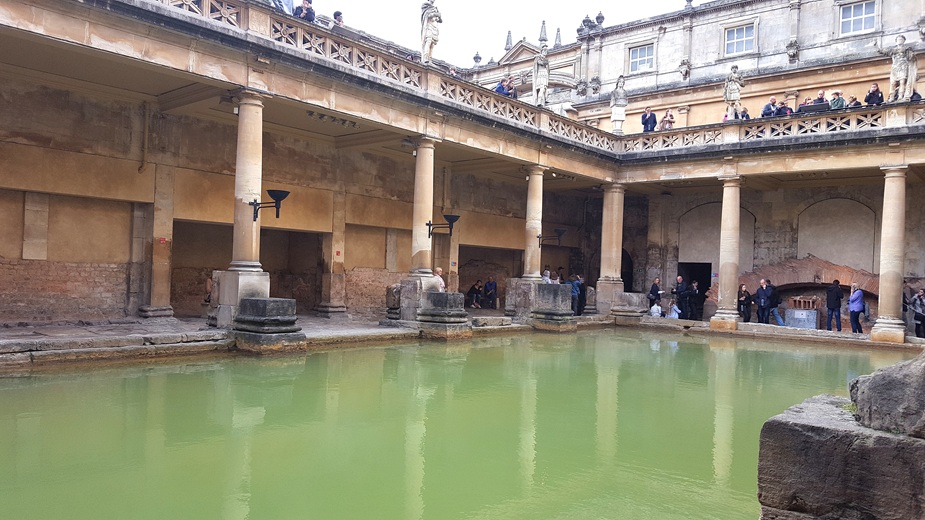
The Roman Baths are one of the most visited heritage attractions in England with over a million visitors a year. They were opened in 1897 as a grand bathing complex where the Romans would come to relax, socialise, and even worship. They are extremely well preserved, with natural hot water of 46c still flowing through them. The entire place is steeped in history, the entrance hall where you queue to get in is an old concert hall, meanwhile, statues of Roman emperors and governors adorn the top level of the baths. Any weekend breaks taken in Bath have to include visiting there.
Place to stay: Living Space offers modern boutique apartments in the centre of Bath, with St Catherine’s Hospital Apartments being the closest to the Roman Baths (only 50 yards away). Perfect for those wanting a bit more space and privacy.
Parade Gardens
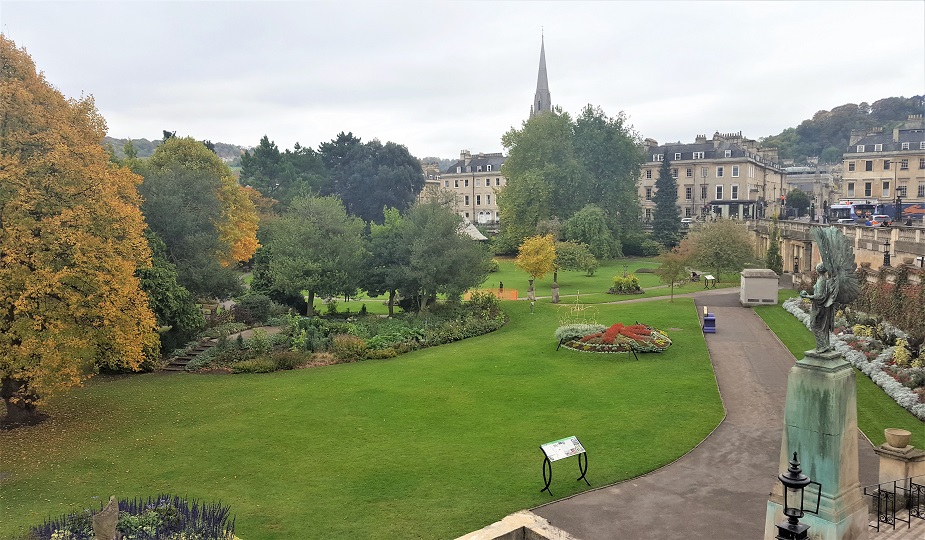
These pleasure gardens are grade II listed and span two and a half acres, right next to Pulteney Bridge and the River Avon. They are a nice place to stroll and relax in all year round, and you can see even in mid-Autumn (I visited in late October) that the gardens are immaculately maintained. In the summer months, concerts are held at the bandstand and you can enjoy the full experience of the flower displays which have won awards from the Royal Horticultural Society.
Margaret’s Buildings
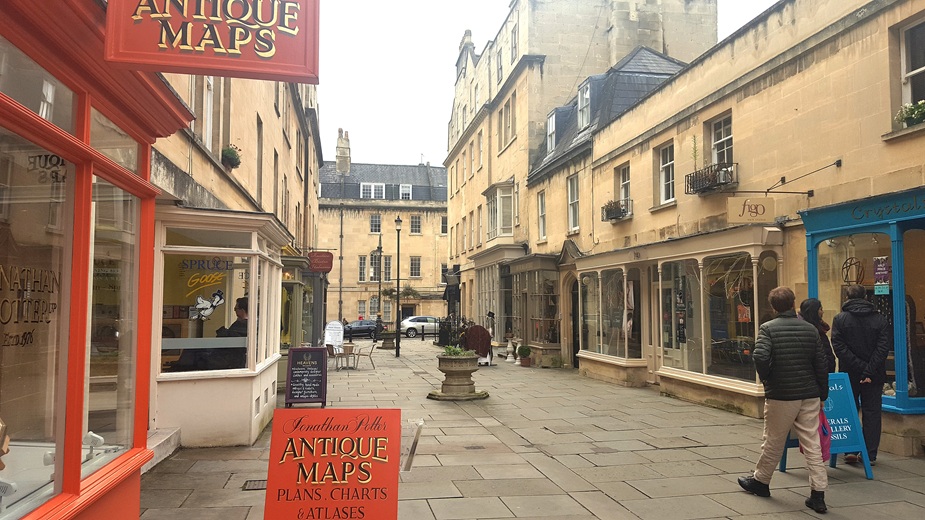
One of the main draws of Bath is its charming independent shops, and this little street is full of them. From jewellery to antique maps, second hand books to homeware, the picturesque street of Margaret’s Buildings is full of Bath stone but could be easily missed. If you’re heading down Brock Street, which connects The Circus and the Royal Crescent, it’s worth looking out for the black exterior of Alexandra May’s jewellery shop so you know where to turn off and explore.
The Circus
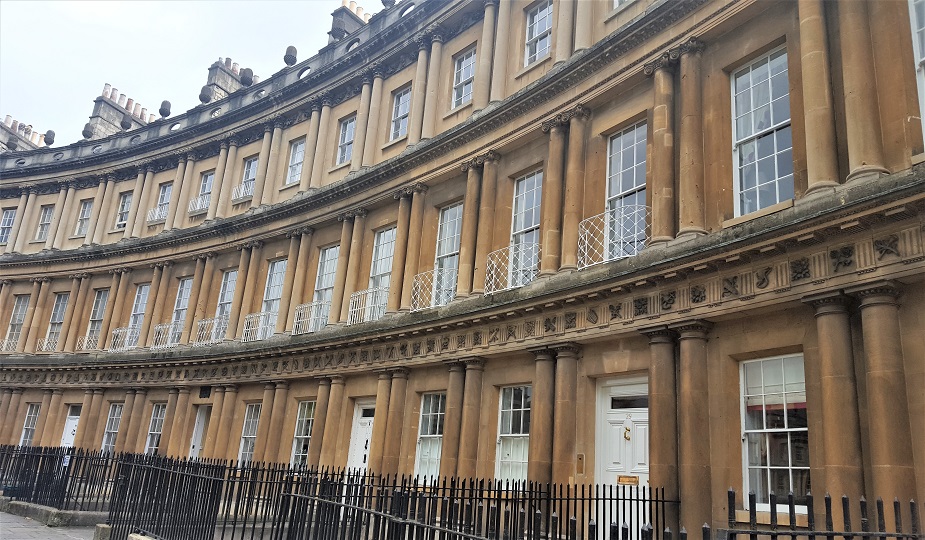
This street forms a circle of large townhouses split into three segments, with three roads coming off of it and a lawn in the centre. It is a great example of Georgian architecture, again made with the famous Bath stone, and lots of emblems can be seen in the stonework, such as acorns, serpents, and cannons. I read on the Visit Bath website that the Circus is joined to the Royal Crescent by a ley-line (straight alignments drawn between various historic structures and prominent landmarks). This was on purpose so that the design represents the sun and the moon which I thought was lovely!
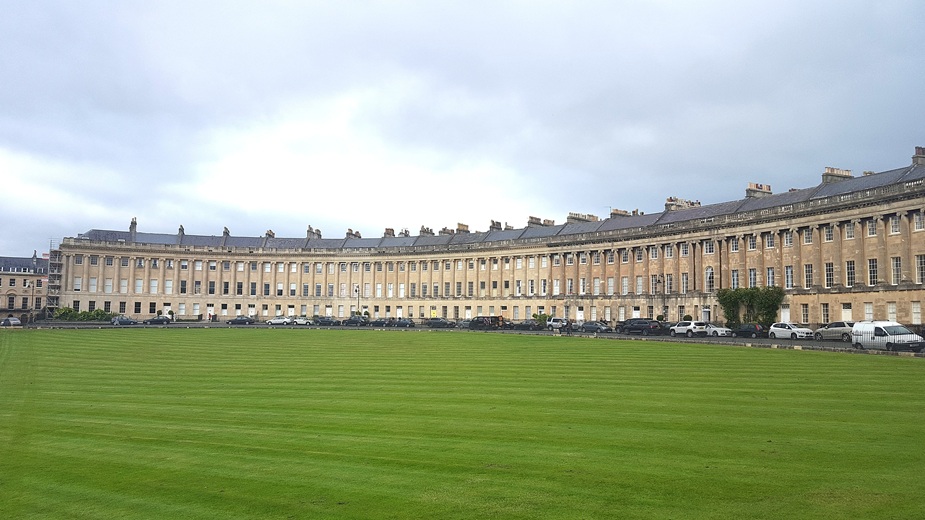
Royal Crescent
This street has got to be the most exclusive postcode in Bath to live in! Similar to the Circus, it is another prime example of Georgian architecture, made up of a semi-circle of Grade I listed houses. Presumably this would be the moon from the design I mentioned above. Many of the houses have plaques on to commemorate the notable people who have lived there over the decades. The outlook from the front of the houses is stunning, over a wide expanse of lawn owned by the residents, towards Royal Victoria Park. The autumn leaves look beautiful here too.
Place to stay: The Royal Crescent Hotel and Museum is perfect for weekend breaks in Bath where you want to relax in style. It has a spa and is set in an acre of beautiful gardens.
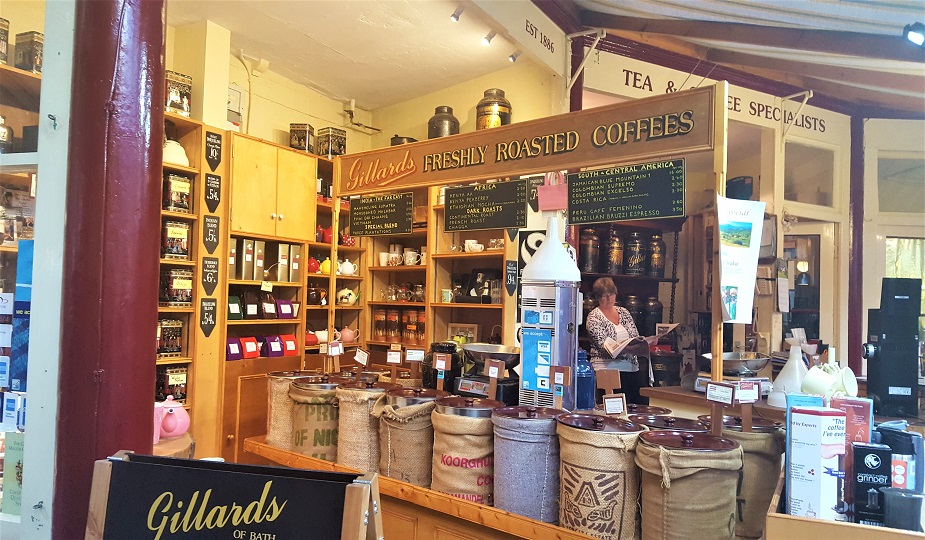
Bath Guildhall Market
Directly opposite Pulteney Bridge, you can enter the oldest shopping venue in the whole of Bath through grand black iron gates. The Bath Guildhall Market has been on this site for over 800 years, and is home to a number of independents including the Bath Humbug Shop and Gillards of Bath (coffee and tea specialists). A secondary Christmas Market, the main one being by Bath Abbey, is held here annually at the end of Autumn in the Market’s adjacent car park.
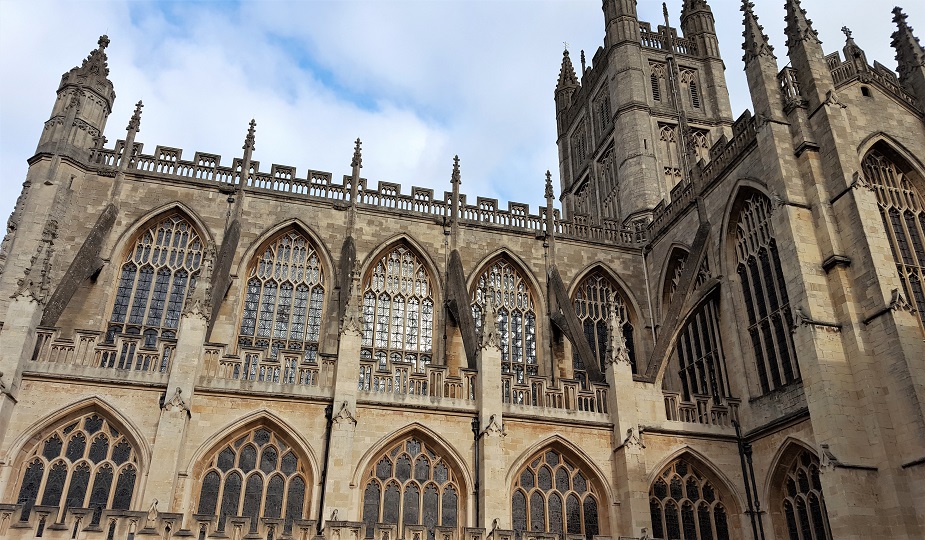
Bath Abbey
Bath Abbey is located in the heart of the city and has been a place for Christian worship for over a thousand years. It’s open daily for visitors to go inside and see its impressive fan vaulted ceiling, large stained glass windows, and carved angels. I actually didn’t realise this when I was there, but you can go up the Bath Abbey tower and look out over the city. This building is the impressive backdrop for the annual Bath Christmas Market which draws in both locals and visitors from far afield every year.
Place to stay: Just around the corner from Bath Abbey is the stylish Abbey Hotel, a well-known dining spot that is perfect for foodies.
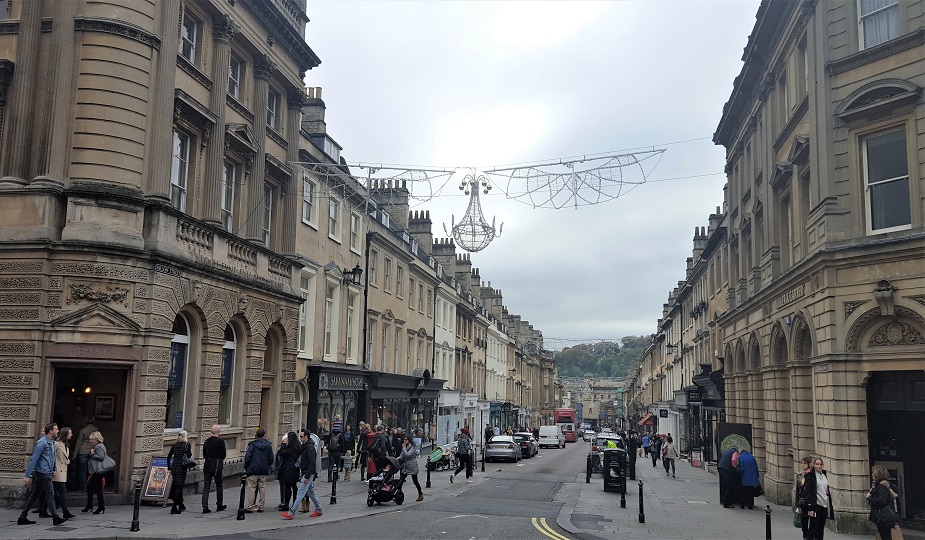
Milsom Street
This street dates back to 1762 and was originally full of grand townhouses. Over the years these have been converted into offices, banks and shops – if you haven’t gathered from this post so far, Bath is a dream for shoppers! Milsom Street has a mixture of independents and well-known high street shops, and it’s also home to Milsom Place – a peaceful and pretty courtyard with restaurants, bars and more shops.
There’s plenty I didn’t get round to seeing in Bath during my short stay, and I’d love to go back one day! However this hopefully provides a guide for weekend breaks in Bath and some of the key things to do if you’re visiting for a short time too. Everywhere I’ve mentioned in this post was in walking distance of each other, and I would say Bath city centre overall has good accessibility for those with mobility issues too, although some streets do have cobbles.
What do you love about Bath? Let me know in the comments.
Weekend breaks in Bath FAQs (2026)
Yes, advance booking is highly recommended, especially for weekends and school holidays. Tickets are released in waves, and buying online is usually about 10% cheaper than at the gate. The Roman Baths offer “Torchlit Summer Evenings” in July and August – this is the best time for photos without the midday crowds.
No, you cannot swim in the original Roman Baths due to the untreated water and the historical preservation of the site. However, if you want to experience the thermal waters, you should book a session at the Thermae Bath Spa nearby, which features a stunning rooftop pool with views over the city.
Very. Almost all the major sights – the Abbey, the Roman Baths, Pulteney Bridge, and the Royal Crescent – are within a 15-to-20-minute walk of each other. I’d highly recommend wearing comfortable shoes as there are cobblestones in places.
While much of Bridgerton is set in London, the production famously uses the perfectly preserved Georgian architecture of Bath to stand in for Mayfair and other Regency locales. The exterior of No. 1 Royal Crescent is used as the façade for the Featherington family’s residence. The sweeping green lawn in front of the crescent is frequently seen in scenes where characters promenade or ride in carriages. The Holburne Museum, located at the end of Great Pulteney Street, is used as the exterior of Lady Danbury’s grand villa.
The most popular way to visit is the “Scarper Tours” or the “Stonehenge Tour Bus,” which departs from near the Bath Spa train station. The journey takes about an hour, and it is much easier than trying to navigate local public buses.

Sophie is a freelance writer and editor, and the founder of Britain and Beyond.
