When I visited the Grand Canyon, I knew of its iconic status – its one of those wonders of the world that you have to try and see if you have the opportunity. However, there was so much that I didn’t know about the place until I read more about it afterwards. If you’re planning a visit, here’s the most interesting facts about the Grand Canyon that I think are great to know in advance. This means you can fully appreciate what an incredible and unique place it is before you arrive!

Size of the Grand Canyon
You don’t have to visit the Grand Canyon to know it’s massive, but it’s really hard to articulate just how much land it takes up until you know the stats. The canyon is about 277 miles (446 kilometres) long, and at its widest point, is around 18 miles (29 kilometres) wide.
We tend to think of how much space it covers at surface level, but what was most surprising to me is that in some areas, the depth of the Grand Canyon reaches over a mile (6,093 feet).
Geology of the Grand Canyon
One of my favourite facts about the Grand Canyon is that some of the oldest rocks at the bottom are estimated to be around 2 billion years old – my mind actually can’t comprehend this is real!
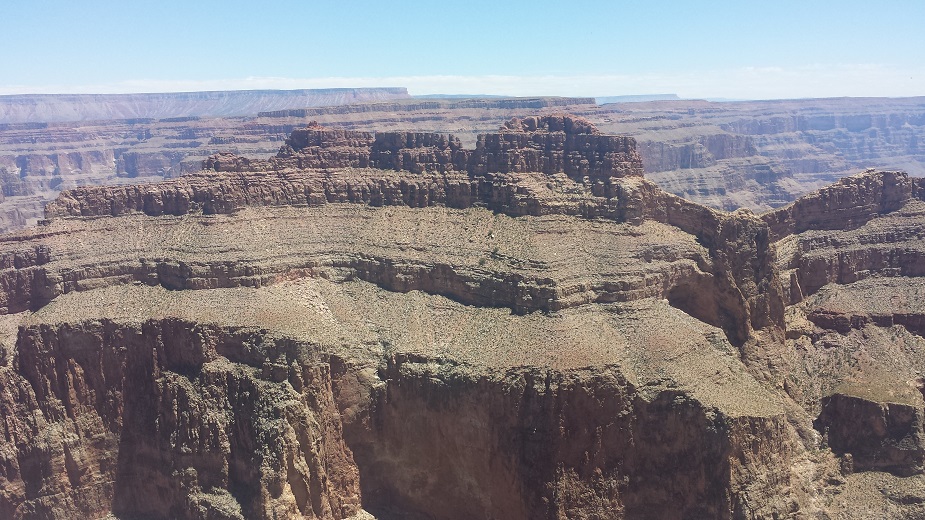
The canyon’s rock layers are often referred to as the Grand Staircase. The canyon exposes three of the four eras of geologic time, making it one of the best places on Earth to study the planet’s history.
The Vishnu Basement Rocks at the bottom of the canyon are some of the oldest exposed rocks on Earth, and the “Vishnu Temple” is a prominent rock formation resembling a temple, named after the Hindu god.
The Bright Angel Fault is a significant geological feature in the canyon, representing a major break in the Earth’s crust – incredible and terrifying at the same time.
Animals at the Grand Canyon
Although the Grand Canyon may seem fairly empty, it’s actually home to over 90 mammal species, including bighorn sheep, mule deer, and mountain lions.
Peregrine falcons nest on the Canyon cliffs, and are the fastest animal on Earth.
The Grand Canyon rattlesnake (Crotalus oreganus abyssus) is a pink-hued rattler and this is the only place on Earth that it’s found.
Activities at the Grand Canyon
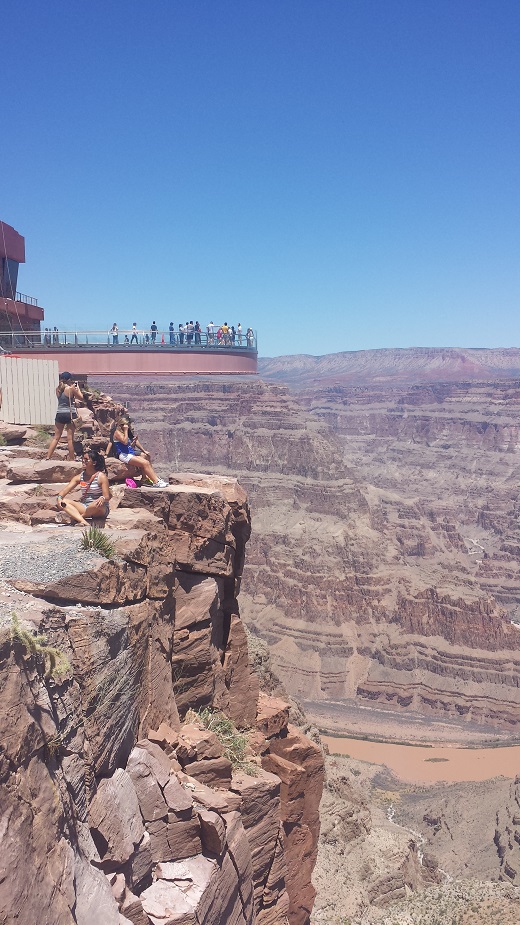
The Skywalk is a bridge with a glass bottom that extends over the canyon with a 4,000ft drop. You can have a professional photoshoot here, which my parents and I did, but honestly I spent most of it just wanting to get off the bridge!
There a few different hiking routes into the canyon. If you’re an expert hiker, the Rim-to-Rim hike involves trekking from one side of the canyon to the other, usually taking 12 to 15 hours.
Most of us know that you can take helicopter tours to see a bird’s-eye view of the canyon, but you can also go white-water rafting through it, along the Colorado River.
The Grand Canyon is designated as an International Dark Sky Park, making it an excellent location for stargazing.
Another one of my favourite facts about the Grand Canyon is that there is an annual Star Party held there, where astronomers share telescopes for night sky observation. I can only imagine what beautiful views they see.
Meanwhile the Grand Canyon Music Festival, also held annually, features a mix of classical, jazz, and contemporary music.
Human history at the Grand Canyon
Indigenous peoples have lived in and around the canyon for at least 12,000 years.
It was only in fairly recent history, the late 1800s, that the canyon became a popular tourist site thanks to railroads.
In 1919, it was designated as a national park, and in 1979 it became a UNESCO World Heritage Site.
Today, about 5-6 million people visit annually, making it one of the most visited natural wonders in the world.

Weather at the Grand Canyon
The highest temperature ever officially recorded at the Grand Canyon was 120°F (49°C) at Phantom Ranch which is at the bottom of the Canyon.
The coldest temperature ever officially recorded at the Grand Canyon was -22°F (-30°C) at North Rim which is at the top of the Canyon.
Summer thunderstorms are common, bringing dramatic lightning displays and flash floods, resulting in rapid and dangerous water flow in the narrow canyon passages.
What’s so incredible about the Grand Canyon is that there are still so many facts humans don’t know – ongoing archaeological surveys continue to reveal new insights regularly.
If you’re planning to visit the Grand Canyon soon, or have already done so, please let me know in the comments! It’s truly like nowhere else I’ve visited and will be somewhere I remember forever.

Sophie is a freelance writer and editor, and the founder of Britain and Beyond.
